
Quick answer: To remove water spots from a car, wash it in the shade, then wipe fresh spots with a 50/50 mix of distilled water and white vinegar on a cool panel and rinse. Use a dedicated water spot remover for stubborn marks. Spots that stay after that have etched the clear coat and need machine polishing.
Water spots are one of those problems that look small until you notice them everywhere. You wash the car, it dries in the sun, and the hood is covered in little white rings. Or the sprinkler catches the driver’s side every morning and the door glass turns cloudy. Most people try scrubbing harder, which does not help and can add scratches.
The fix depends on how long the spots have been there and how deep they go. Fresh mineral deposits wipe off. Older spots bond to the surface and need a chemical remover. The worst ones eat into the clear coat and can only be leveled out with a polisher. This guide explains how to tell which kind you have and what to do about each, plus how to keep them from coming back. It is written from what we see every week on cars around Champaign, Urbana, Savoy and the rest of Champaign County.
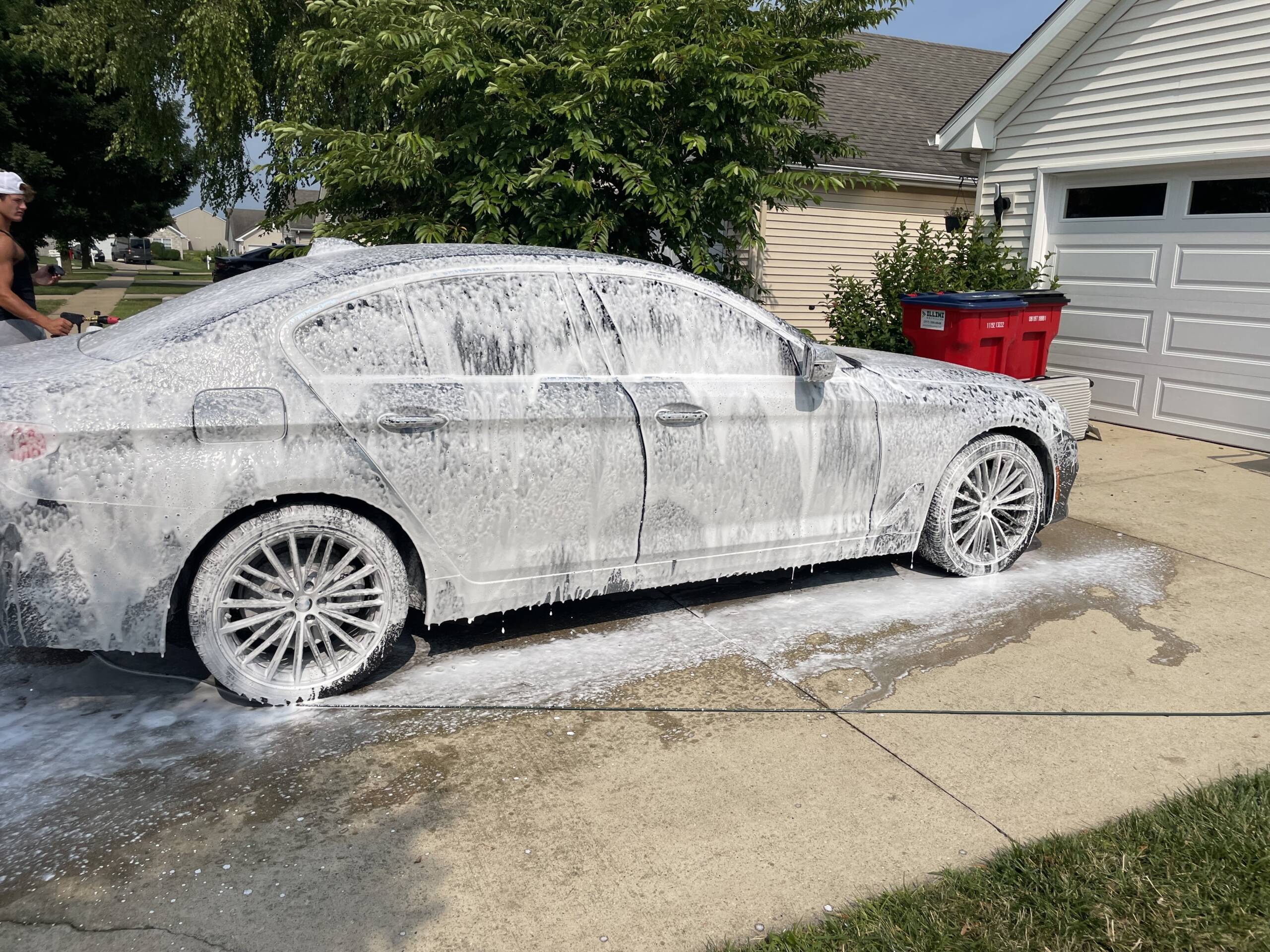
What causes water spots on a car?
A water spot is what is left behind when a drop of water evaporates. Pure water would leave nothing. Real water carries dissolved minerals, mostly calcium and magnesium, plus whatever dirt or chemicals it picked up along the way. When the drop dries, those minerals stay on the paint or glass as a ring or dot.
The most common sources we run into:
- Hard tap or well water. Washing with mineral-heavy water and letting it air dry is the classic cause. Rural homes on wells often have the hardest water.
- Lawn sprinklers. Parking near a sprinkler means the same panels get hit and dried over and over, building up layers.
- Washing in direct sun. A hot hood can dry a drop in seconds, before you have a chance to towel it off.
- Rain and acid rain. Rain picks up pollutants on the way down. When it dries on the car, it can leave spots that are slightly acidic.
- Automatic car washes. Many rinse with reclaimed or untreated water and then use a blower that does not get every drop.
What are the three types of water spots?
Detailers usually sort water spots into three levels. Knowing which one you have saves a lot of wasted effort.
Type 1: mineral deposits. These sit on top of the surface. They look like chalky dots or rings, and you can sometimes feel them with your fingertip. They come off with a wash and a mild acidic cleaner.
Type 2: bonded minerals. These have been baking on the paint for a while, often through a few hot days. They do not wash off, and vinegar only fades them. A dedicated water spot remover or a clay bar usually takes them off.
Type 3: etching. The minerals and any acid in the water have eaten into the clear coat, leaving a small crater or ring shape. After cleaning, you can still see the outline when light hits it. No spray will fix this, because the damage is a dent in the surface. It needs paint correction to level the clear coat around it.
A quick test: clean the area, then look at it under a flashlight or in direct sun from an angle. If the outline is still there and the surface feels smooth, you are looking at etching.
How do you remove water spots from car paint? Step by step
Start with the gentlest method and only step up if the spots remain. Always work on a cool panel in the shade.
- Wash the car properly. Use a pH-neutral car shampoo and the two-bucket method so you are not grinding dirt into the paint while you work on the spots.
- Dry it completely. Use a clean microfiber drying towel. You need to see the spots on a dry, clean surface.
- Try a vinegar solution. Mix equal parts distilled water and white vinegar in a spray bottle. Mist one small section, let it sit for 30 to 60 seconds, then wipe with a soft microfiber. Do not let it dry on the paint.
- Rinse and neutralize. Rinse the section with clean water or wipe it with a damp towel so no vinegar is left behind, then dry.
- Step up to a water spot remover. If spots remain, use a product made for removing mineral deposits from automotive paint. Follow the label, work small areas and rinse well.
- Clay the surface. A clay bar with lubricant can pull bonded minerals and other contamination off the paint. It also tells you how much is really left.
- Inspect under light. Any outline that remains after claying is etching.
- Polish out etching. Light etching comes out with a machine polish. Deeper etching may need a compound first, followed by a finishing polish.
- Protect the paint. Polishing leaves the paint bare. Finish with a paint sealant or a ceramic coating so the next round of water has something to sit on besides your clear coat.
How do you remove water spots from car windows and glass?
Glass is harder than paint, so you can be a bit more aggressive, but the same order applies.
- Start with the vinegar and distilled water mix and a glass towel.
- For heavier buildup, use a glass-specific water spot remover or a glass polish with a hand pad.
- Very heavy spotting on side windows, the kind you get from years of sprinkler exposure, may need a glass polish applied with a machine and a dedicated glass pad.
- Keep products off rubber seals and window tint film on the inside, and never use a razor blade on tinted glass.
Once the glass is clean, a glass sealant or water repellent makes water bead and roll off, which means less spotting and better visibility in rain.
Is vinegar safe on car paint?
Diluted white vinegar is a common and effective first step, and used briefly it will not harm healthy factory clear coat. The risks come from misuse. Letting it dry on a hot panel can leave its own marks. Leaving it on for many minutes, or using it straight, is more aggressive than it needs to be. It can also strip wax and some sealants, so plan to reapply protection afterward. Keep it off bare metal, chrome trim that is already pitted, and fresh paint that has not fully cured.
Why won’t my water spots come off?
This is one of the most common questions we get. If you have washed, used vinegar and even tried a spot remover and the marks are still there, there are usually three reasons:
- They are etched. The mark is now part of the clear coat’s shape, not a deposit sitting on it. Only polishing removes it.
- You are working in heat. Products flash off too fast on a warm panel to do their job. Try again in the shade on a cool day.
- There are layers. Sprinkler spots build up over months. Each pass removes a layer, so it can take several careful rounds.
On dark paint especially, people often mistake etching for stubborn mineral deposits and keep scrubbing. That just adds swirl marks on top of the spots. If two rounds of chemical cleaning do not work, stop and look at paint correction.
Do ceramic coatings stop water spots?
Honest answer: a ceramic coating makes water spots much easier to deal with, but it does not make a car spot-proof. A coated car beads water strongly. Those tight beads can still dry into spots if you leave the car in the sun with water on it. The difference is that the minerals sit on the coating instead of the clear coat, so they wipe off far more easily and are much less likely to etch the paint underneath.
That is a big reason people choose a ceramic coating. You still need to dry the car after washing, but you are protecting the coating instead of the paint itself. Coatings at The Detail Docs run $600 to $1,500 depending on the vehicle and package, and every job starts with a full decontamination wash and paint prep, including correction if needed.
How do you prevent water spots after washing?
Prevention is cheaper than correction. These habits make the biggest difference:
- Wash in the shade, early in the morning or in the evening, never on a hot hood at midday.
- Work one section at a time and keep the car wet until you are ready to dry it.
- Dry right away with a plush microfiber drying towel or a blower.
- Use a spray detailer or drying aid as you towel off to lubricate the surface and pick up leftover drops.
- Move the car away from sprinklers, or adjust the sprinkler heads.
- After a rain shower, give the car a quick wipe or rinse with clean water if it is going to sit in the sun.
- Keep a sealant or coating on the paint so minerals are not sitting directly on clear coat.
If washing at home keeps leaving spots no matter what you do, a regular hand wash from someone who dries every panel is an easy fix. Our maintenance wash includes a pH-neutral hand wash, a microfiber hand dry and a quick detailer spray, and runs $60 to $120 depending on vehicle size.
Water spots and dark cars
Black, dark blue and dark gray cars show water spots the most because the white mineral rings contrast with the paint, and dark paint gets hotter in the sun, which makes drops dry faster. If you own a dark car, prevention matters even more. Drying immediately, parking in a garage or shade when possible, and keeping protection on the paint will save you from correction work later. White and silver cars hide spots well, which means etching can build up for a long time before anyone notices it.
What supplies do you need to remove water spots at home?
You do not need a garage full of products for Type 1 and Type 2 spots. A basic kit covers most cars:
- Two buckets, a pH-neutral car shampoo and a soft wash mitt.
- A large microfiber drying towel and a stack of clean, short-pile microfiber towels for wiping.
- A spray bottle with a 50/50 mix of distilled water and white vinegar.
- A water spot remover made for automotive paint, and a separate one for glass if your windows are bad.
- A clay bar or clay mitt with clay lubricant.
- A spray sealant to put protection back on once the paint is clean.
Type 3 etching is where the shopping list gets long: a dual-action polisher, pads, compound, polish, an inspection light and practice. That is the point where most people decide it is cheaper to hire it out than to buy the tools for one job.
When should you call a pro?
Handle it yourself if the spots are fresh and come off with a wash and a vinegar wipe. Bring in a professional when:
- The outlines remain after chemical cleaning and a clay bar.
- You do not own a machine polisher or have never used one.
- Spots cover most of the car, which usually means sprinkler or hard water damage built up over months.
- The glass is so spotted it affects visibility at night or in rain.
- You want protection applied afterward so it does not happen again.
Our exterior detail includes a two-bucket hand wash, clay bar decontamination, glass cleaning and a paint sealant, starting at $179. If the spots have etched the clear coat, paint correction is quoted per vehicle based on how deep the damage goes.
Key takeaways
- Water spots are minerals left behind when water dries, and the longer they sit the harder they are to remove.
- Start gentle: wash, then a short vinegar and distilled water wipe on a cool panel.
- Bonded spots need a dedicated remover or a clay bar.
- Etched spots are damage to the clear coat and need machine polishing.
- Drying right away and keeping protection on the paint is the best prevention.
Frequently asked questions
Are water spots on a car permanent?
Most are not. Mineral deposits and bonded spots can be removed with the right cleaner or a clay bar. Spots become permanent only when they etch into the clear coat, and even then most etching can be polished out. Spots that go through the clear coat are rare and would need paint repair from a body shop.
Can I use distilled water to rinse my car?
Yes, and it helps. Distilled or deionized water has almost no minerals, so a final rinse with it leaves very little behind if a drop dries before you reach it. Many detailers use a filtered final rinse for that reason. It does not replace drying, but it makes spotting far less likely on hot days.
Does a clay bar remove water spots?
A clay bar removes bonded contamination sitting on top of the paint, which includes many older mineral deposits. It will not fix etching, because that is a dip in the clear coat rather than something stuck to it. Claying after a chemical cleaner is a good way to see exactly what damage remains.
Why does my car have spots after it rains?
Rain collects dust and pollutants on the way down, and when the drops dry in the sun they leave that material behind as spots. Cars that sit outside after a shower, especially dark ones, show it the most. A quick rinse and dry, or protection like a sealant or coating, keeps rain spots from bonding.
How do I get sprinkler spots off my car windows?
Start with a vinegar and distilled water mix on cool glass, then move to a glass-specific water spot remover if needed. Sprinkler buildup often needs a glass polish because it builds in layers over months. Afterward, apply a glass sealant and move the car or redirect the sprinkler so the problem stops.
Can water spots damage my clear coat?
Yes, if they are left long enough. Minerals and any acid in the water can slowly etch into the clear coat, especially in strong sun. That etching shows as permanent outlines that need polishing to remove. Removing spots soon after they appear and keeping the paint protected prevents most of that damage.
Is a touchless car wash bad for water spots?
It can be. Many automatic washes rinse with untreated or reclaimed water, and the blowers at the exit rarely remove every drop. Those leftover drops dry into spots on the drive home. If you use one, carry a drying towel and wipe the car down before the water evaporates.
How long should vinegar sit on water spots?
About 30 to 60 seconds on a cool panel is enough for a 50/50 distilled water and vinegar mix. Wipe it off with a clean microfiber, then rinse or wipe the area with plain water. Do not let it dry on the paint, and work in small sections so it never sits longer than it should.
Will polishing remove all water spot etching?
Polishing removes most etching because it levels the clear coat around the mark. Very deep etching may only be reduced rather than fully erased if removing it would take off too much clear coat. A good detailer measures the risk panel by panel and will tell you before going too far.
Do water spots affect my car’s resale value?
They can. Heavy spotting and etching make paint look dull and neglected, which buyers notice right away, especially on dark cars. Removing spots and polishing the paint before listing is a common step to help a car show better, and protection afterward keeps it looking that way while it is for sale.
Spot-free paint, done in your driveway
Tired of fighting water spots after every wash? The Detail Docs is a mobile detailer that works at your home or office across Champaign County, including Champaign, Urbana, Savoy, Mahomet, Rantoul, Tolono and St. Joseph, and we also serve Danville and Monticello. We look at the spots, tell you whether a wash and decontamination will clear them or whether the paint needs correction, and give you a price before any work starts. Nothing is due until the job is finished. Schedule your water spot removal or text us at 217-418-4769 with a photo of the paint.
