
Quick answer: To get smoke smell out of a car, remove the source first: empty and wash the ashtray, replace the cabin air filter, deep-vacuum, then shampoo and hot-water extract the carpets and cloth seats. Wipe every hard surface and the inside glass, treat the headliner gently, and finish with an ozone treatment for heavy cases.
Smoke smell is one of the hardest odors we deal with as detailers, and it is almost never a single-step fix. Cigarette and cigar smoke leave a sticky, yellowish film of tar and nicotine on every surface in the cabin. That film soaks into foam, fabric and the headliner, coats the glass, and gets pulled through the air conditioning system every time you turn on the fan. Spraying an air freshener just layers a perfume on top of it. A week later the smell is back, usually stronger on a hot day when the sun warms the dash and seats.
This guide walks through what actually works, in the order we do it on real jobs around Champaign, Urbana and the rest of Champaign County. You can do most of it yourself with household tools and a free afternoon. Where a step needs equipment most people do not own, like a hot-water extractor or an ozone generator, we will say so plainly.
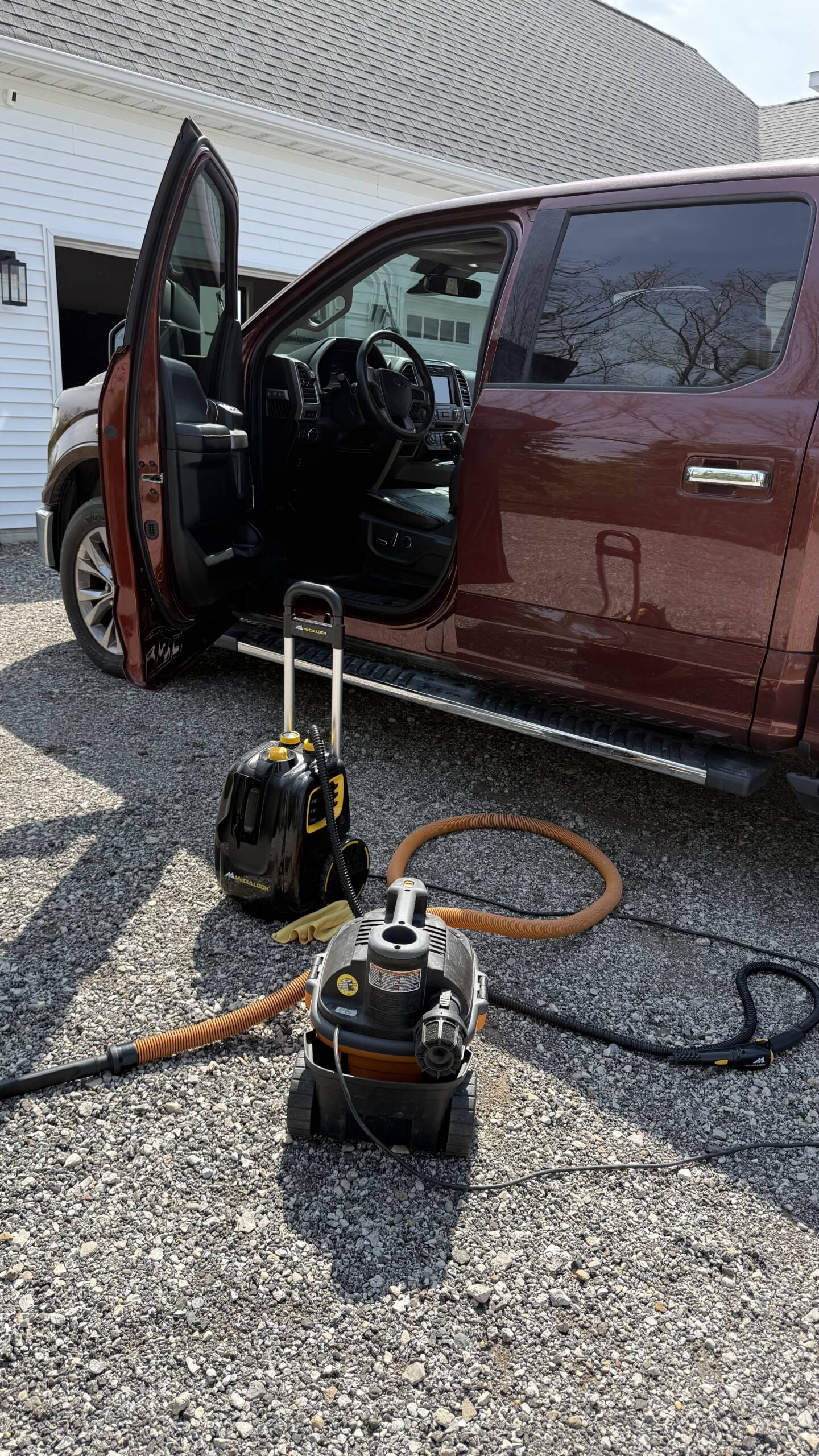
Why does smoke smell stay in a car for so long?
Smoke is not just a gas that floats out the window. It carries tiny particles of tar and resin that land and stick. In a house those particles spread over a big area. In a car they are concentrated into a small, closed box full of porous materials. A few things make the problem stubborn:
- Foam and fabric absorb it. Seat cushions, carpet padding and floor mats act like sponges. The surface fibers can smell fine while the foam underneath still holds residue.
- The headliner traps it. Smoke rises, so the fabric over your head often gets the heaviest coating. It is also the most delicate surface to clean.
- The HVAC system recirculates it. The cabin air filter and the evaporator area collect residue, then blow it back into the cabin whenever the fan runs.
- Hard plastics hold a film. Run a white towel with a little interior cleaner across a smoker’s dashboard and it often comes back tan. That film keeps giving off odor, especially in summer heat.
- Glass gets hazy. The inside of the windshield builds up a greasy layer that smells and also causes glare at night.
Once you understand that the smell lives in a residue, the plan becomes simple: remove the residue from every place it landed, then deal with whatever is left in the air and the vents.
How do you get smoke smell out of a car? Step by step
Here is the order we follow. Doing the steps in sequence matters, because cleaning the seats before you change the cabin filter just lets the fan push old odor back onto clean fabric.
- Remove every source. Take out the ashtray, any lighter insert, old butts under the seats and in the door pockets, and any wrappers or papers that sat in the smoke. Wash the ashtray in hot soapy water or replace it.
- Air the car out. Open all doors for an hour on a dry day. This does not fix anything by itself, but it clears the loose odor so you can tell which areas are the worst.
- Replace the cabin air filter. On most vehicles it sits behind the glove box. A smoker’s filter is usually brown or gray. A new one is inexpensive and makes a noticeable difference by itself.
- Pull the mats and vacuum thoroughly. Vacuum the carpet, under and between the seats, the seat tracks, the trunk, and the seams of every seat. Ash settles deep in seams and keeps releasing odor.
- Wipe all hard surfaces. Use a quality interior cleaner and microfiber towels on the dash, console, door panels, steering wheel, seat belt buckles, vents and pillars. Change towels often. If the towel turns yellow, keep going until it comes back clean.
- Clean the inside glass twice. The first pass cuts the film. The second pass removes streaks. Do not forget the top edge of the windshield near the headliner and the rear glass.
- Shampoo and extract fabric. Carpets, cloth seats and floor mats need a cleaner worked in with a brush, then pulled back out with hot water extraction. This is the step that removes residue from deep in the fibers instead of just the top layer.
- Treat the headliner carefully. Lightly mist a cleaner onto a towel, not onto the headliner, and blot. Soaking it can soften the glue and cause sagging.
- Clean the seat belts. Pull each belt all the way out, clamp it so it does not retract, clean it with a mild cleaner and a soft brush, and let it dry fully before releasing it. Belts are one of the most missed odor sources.
- Treat the air system. With a fresh filter in, run the fan on high with fresh air (not recirculate) while the doors are open. Some detailers also use an HVAC cleaning product made for the purpose.
- Use ozone for heavy cases. An ozone generator breaks down odor molecules the cleaning could not reach. It has to be done in an empty, closed vehicle, followed by a full airing out. More on that below.
- Dry everything completely. Damp carpet with leftover residue can create a second smell problem. Leave windows cracked and run the heat or AC until the fabric is dry to the touch.
Do baking soda, vinegar and charcoal actually work?
These are the home remedies everyone tries first, and they have a place. They just do not do the heavy lifting on their own.
Baking soda absorbs some odor from carpet and cloth. Sprinkle it on dry carpet, work it in with a stiff brush, leave it overnight, then vacuum it out completely. It helps take the edge off but it does not dissolve tar residue.
White vinegar diluted with water can cut light film on hard plastics and glass. Bowls of vinegar left in the car overnight can absorb a little airborne odor. The car will smell like vinegar for a day afterward, which fades.
Activated charcoal bags are good at slowly pulling odor out of the air in a closed car. They are a nice finishing touch after a real cleaning, and a smart way to keep a car fresh, but they cannot clean the headliner.
Coffee grounds and dryer sheets mostly mask the smell. They can make the car seem better for a day while the residue is still there.
Our honest take: if the car was lightly smoked in a few times, the home remedies plus a thorough vacuum and wipe-down may be enough. If someone smoked in it daily for years, you need extraction, a new cabin filter and very likely ozone.
Is an ozone treatment safe and does it work?
Ozone is the tool professionals reach for when cleaning alone does not finish the job. An ozone generator produces O3, which reacts with odor-causing compounds and breaks them down, including in places you cannot reach with a towel, like inside seat foam and behind panels.
It does work well on smoke, but there are rules:
- Nobody, including pets, should be in the vehicle while it runs. Ozone irritates the lungs.
- It works best after the car has been cleaned. Running ozone on a dirty interior wastes time because the residue keeps producing odor.
- The car needs to be aired out well afterward before anyone drives it.
- Long, repeated sessions are hard on rubber and some plastics, so it should be used in controlled sessions, not left running for days.
At The Detail Docs we may recommend an ozone treatment as an add-on to an interior detail for severe smoke cases. It is quoted per vehicle based on how bad the odor is.
How do you get smoke smell out of leather versus cloth seats?
The material changes the approach.
Cloth seats are the hardest because the residue goes into the fabric and the foam behind it. They need a fabric cleaner agitated with a soft brush, then hot water extraction to rinse and pull the dirty solution back out. One pass is often not enough on a heavy smoker’s car. We usually do the driver’s seat twice because it gets the most exposure.
Leather seats resist odor better because the surface is sealed, but smoke still collects in the perforations and stitching. Clean with a pH-balanced leather cleaner and a soft brush, wipe it off, then apply a leather conditioner so the leather does not dry out. Avoid harsh all-purpose cleaners on leather.
Vinyl and plastic clean up the easiest. A good interior cleaner and a couple of towel changes usually remove the film completely.
What about smoke smell in the car vents?
If the car smells fine with the fan off and bad as soon as you turn it on, the problem is in the air system. Start with the cabin air filter, since it is the cheapest and easiest fix. Then clean the vent slats with a detail brush and interior cleaner. If the smell still comes through, it may be sitting in the evaporator box and ducts. HVAC cleaning foams and ozone treatments with the fan on recirculate can reach those areas. If the odor is musty rather than smoky, that points to moisture in the system, which is a different problem with a different fix.
Can you get smoke smell out of a car permanently?
In most cars, yes, it can be removed to the point where nobody notices it. The deciding factors are how long the vehicle was smoked in and whether every source gets cleaned. A car that was smoked in for a few months usually responds very well. A car smoked in daily for ten years may still have a faint smell on a hot day after a full treatment, mostly from the headliner and seat foam. In those cases, a second ozone session a week later often finishes it off.
The other part of “permanent” is simple: if smoking continues in the car, the smell comes back. A smoke-free rule plus a charcoal bag under the seat keeps a freshly detailed car fresh.
Smoke odor and used car buyers
We hear from a lot of people who just bought a used car and noticed the smell after the dealer’s air freshener wore off. If that is you, do not panic. Follow the steps above or book an interior detail before you put money into anything else. It is also worth checking the headliner for yellow stains and the cabin filter on any used car before you buy it, because both tell you how heavily it was smoked in.
On the selling side, smoke smell lowers what buyers will pay and makes the car harder to sell. A thorough interior detail before listing is one of the most cost-effective things you can do.
When should you call a pro?
Do it yourself if the smell is light and you have a free weekend. Call a professional when:
- The car was smoked in regularly for a long time.
- You have cloth seats and no access to a hot water extractor.
- The headliner is stained yellow or brown.
- You tried baking soda, sprays and charcoal and the smell came back.
- You are selling the car or just bought it and want it done right the first time.
Our interior detail goes after the places smoke hides: every carpet and cloth seat is shampooed and extracted, leather is cleaned and conditioned, the dash, panels and door jambs are wiped down, the inside glass is cleared of film, and the cabin gets an odor treatment. Interior details run $125 to $250+ depending on vehicle size and condition, and severe smoke cases may need the ozone add-on, quoted per vehicle. If you want the outside done at the same visit, a full detail covers both. You can see everything that goes into the inside work in our post on what an interior detail includes.
Key takeaways
- Smoke smell lives in a sticky residue, so it has to be cleaned off, not covered up.
- Change the cabin air filter before you clean the seats.
- Hot water extraction is the step that gets residue out of cloth seats and carpet.
- Clean the headliner gently and do not forget the seat belts.
- Ozone finishes heavy cases, but only in an empty car that gets aired out afterward.
Frequently asked questions
How long does it take to get smoke smell out of a car?
A light smoke smell can be cleared in one afternoon of vacuuming, wiping and airing out. A heavy smoker’s car usually needs a full interior detail of two to three hours, plus drying time, and sometimes an ozone session. Plan for the smell to keep improving for a few days afterward as the fabric fully dries.
Will an air freshener cover cigarette smoke in a car?
Only for a short time. Air fresheners add scent on top of the tar film without removing it, so the smoke odor returns once the fragrance fades, often stronger on hot days. Fresheners work best as a final touch after the residue has been cleaned out of the fabric, glass and hard surfaces.
Does replacing the cabin air filter help with smoke odor?
Yes, and it is one of the cheapest steps. A smoker’s cabin filter holds a lot of residue and pushes odor back into the cabin every time the fan runs. Replace it before you clean the seats and carpet so the fresh air coming through the vents does not carry old smell onto clean surfaces.
Can I clean a smoke-stained headliner myself?
You can, carefully. Spray cleaner onto a microfiber towel instead of the headliner, then blot and lightly wipe in one direction. Never soak it or scrub hard, because the adhesive behind the fabric can loosen and the headliner may start to sag. Heavy yellow staining is a good reason to have a detailer handle it.
Is it worth buying a used car that smells like smoke?
It can be, as long as the price reflects the work needed. Most smoke smell can be removed with a full interior detail and, for heavy cases, an ozone treatment. Check the headliner and cabin filter first, since heavy staining there tells you how long it was smoked in and how much cleaning to expect.
How do detailers remove cigarette smell from cloth seats?
Detailers spray a fabric cleaner, agitate it with a soft brush to loosen residue from the fibers, then use a hot water extractor to rinse and pull the dirty solution out. Heavily affected seats get a second pass. Extraction reaches deeper than a household upholstery spray, which mostly treats the top layer of fabric.
Do I need to be home while my car gets an odor treatment?
No. As long as the vehicle is accessible, you can leave a key and carry on with your day. With an ozone treatment it is actually better that nobody is in or right next to the car while the machine runs. We let you know when it has been aired out and is ready to drive.
Why does my car smell like smoke when the heat is on?
Heat warms the residue on the dash, seats and headliner, which releases more odor, and the fan pulls air across a dirty cabin filter and through ducts that hold smoke film. Replacing the filter, cleaning the vents and treating the air system, sometimes with ozone, usually stops that warm-air smell.
Will smoke smell come back after a detail?
If the residue is fully removed and nobody smokes in the car again, it should not come back in a noticeable way. On very heavy cases a faint smell can show up on the first hot days because foam releases a little more residue. A follow-up ozone session or a charcoal bag usually takes care of it.
Does ozone damage a car’s interior?
Used correctly in controlled sessions, ozone is a standard detailing tool that does not harm a normal interior. Problems come from running a generator for very long periods, which can dry out rubber and some plastics. That is why we treat it as a measured step after cleaning, not something left running for days.
Smoke smell removal at your driveway in Champaign County
If you would rather hand this job off, The Detail Docs comes to you. We are a mobile detailer serving Champaign, Urbana, Savoy, Mahomet, Rantoul, Tolono, St. Joseph, Danville, Monticello and the surrounding area, and we bring our own water and power, so all we need is access to the car. There is no deposit, and you pay when the job is done. Tell us the vehicle and how heavy the smoke smell is, and we will quote the interior detail plus any ozone work. Book your smoke odor detail here or call or text 217-418-4769.
