
Quick answer: A mold or mildew smell in your car means moisture is trapped somewhere, usually in the carpet padding, floor mats or the air conditioning system. Find and stop the water source first, dry the interior completely, then vacuum, clean and extract the carpets, replace the cabin filter and treat the AC. Odor sprays alone will not fix it.
That damp, basement-like smell is easy to recognize and hard to ignore. Sometimes it hits you the moment you open the door. Other times it only shows up when you turn on the air. Either way, it means the same thing: water got into the car and stayed long enough for mildew or mold to start growing.
The good news is that most musty smells in cars come from a fixable source and a surface level of growth that a thorough interior cleaning can handle. The part people get wrong is the order. If you clean before you find the leak, the smell comes back in a week. This guide explains how to track down where the smell is coming from, what you can do yourself, how to stay safe while you do it, and when the job is bigger than a detail. We see this a lot in Champaign County, where snowy winters and humid summers give moisture plenty of chances to get inside.
What is the difference between mold and mildew in a car?
People use the words interchangeably, and for a car owner the fix is mostly the same. Mildew is a type of mold that tends to grow flat on surfaces. It often looks like a light gray or white powdery film and smells musty. Other molds can be fuzzy and come in green, black or other colors, and they tend to grow deeper into materials like foam padding.
The smell is often the first sign, well before you see anything. If you can see growth on seats, belts or the headliner, it has usually been there a while and the moisture problem is significant.
What causes a mildew smell in a car?
Mold needs three things: moisture, something to feed on, and time. A car interior has plenty of food in the form of dust, skin cells, food crumbs and fabric. So the real question is always where the water came from. The usual suspects:
- Wet floor mats and snow. In an Illinois winter, snow melts off boots onto the mats all season. Water soaks through or around the mats into the carpet and padding underneath, where it can stay damp for weeks.
- A clogged AC drain. The air conditioning makes condensation that is supposed to drip out under the car. If the drain clogs, water backs up into the evaporator box or onto the passenger floor.
- Leaking door or window seals. Worn rubber lets rain in along the doors or trunk.
- Blocked sunroof drains. Sunroofs have small drain tubes that clog with debris and send water down the pillars and into the headliner or footwells.
- Clogged cowl drains. Leaves and seeds below the windshield can block drains and let water into the cabin air intake.
- Spills. Water bottles, coffee and kids’ drinks that soak into seats and carpet.
- Windows or doors left open in rain. A single storm can soak a car.
- Flood exposure. Any car that sat in standing water needs much more than cleaning.
How do you find where the musty smell is coming from?
Spend ten minutes investigating before you clean anything.
- Smell with the fan off and on. If the smell appears or gets much stronger when the fan or AC is on, the source is likely the AC system or cabin filter.
- Pull the floor mats. Press your hand hard into the carpet in each footwell, especially the passenger side and rear footwells. Damp or cold carpet is a giveaway.
- Check under the mats and in the trunk. Lift the trunk floor and look at the spare tire well. Water often pools there unnoticed.
- Look at seals and the headliner. Water stains on the headliner near the sunroof or along the door tops point to a drain or seal problem.
- Look for visible growth. Check seat seams, seat belts, the backs of seats and the underside of the mats.
Fixing the leak may be a mechanic’s job, like clearing a drain tube or replacing a seal. Do that first. Cleaning a car that still lets water in is wasted money.
Is mold in a car dangerous?
Mold exposure can cause or worsen allergy symptoms, irritate the eyes, nose and throat, and be a bigger concern for people with asthma, other breathing conditions or weakened immune systems. A car is a small, closed space, so the concentration can be higher than in a room. If anyone who rides in the car has a health condition, talk to a doctor and take the problem seriously.
When you clean mold yourself, wear gloves, eye protection and a well-fitted N95 mask, and keep the doors open. The EPA’s mold guidance is a good plain-language resource on health effects and cleanup. And if growth covers a large area, or the car was flooded, it is not a do-it-yourself job.
How do you get rid of mold and mildew smell in a car? Step by step
Once the water source is fixed, this is the process.
- Park in the sun with doors open. Sunlight and airflow start the drying and make the work area safer.
- Remove everything. Take out the mats, trunk liner, car seats, gear and anything else that is loose.
- Dry the interior completely. Use fans, a dehumidifier in a closed garage, or a wet vacuum to pull water out of the carpet. Padding underneath can hold water for a long time, so check it before moving on.
- Vacuum thoroughly. A vacuum with a HEPA filter helps keep spores from blowing back into the air. Empty it outside.
- Clean hard surfaces. Wipe the dash, console, door panels, seat belt buckles and trim with an interior cleaner suited to the surface, changing towels often.
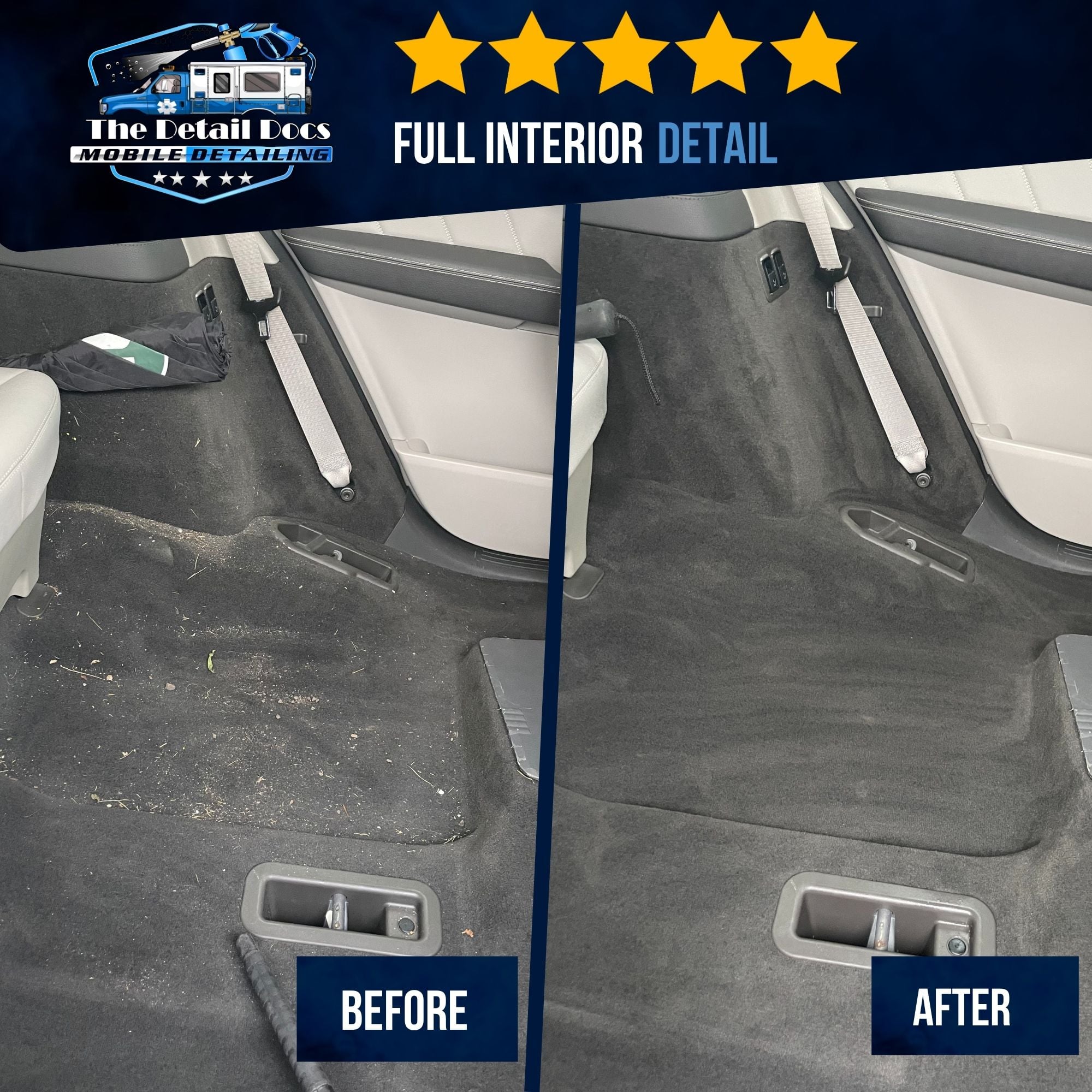
- Shampoo and extract fabrics. Carpets and cloth seats need cleaning agitated into the fibers, then hot water extraction to pull out what is embedded. Extraction removes the residue that keeps feeding growth.
- Clean leather and vinyl gently. Use a leather cleaner, then condition. Avoid soaking leather.
- Replace the cabin air filter. A musty filter keeps blowing odor through the vents.
- Treat the AC system. An evaporator or HVAC cleaner made for cars can clean the area behind the dash. Some detailers follow with an ozone treatment in an empty car.
- Dry again. After extraction, run the heat with windows cracked until every surface is dry to the touch. Leaving damp carpet is how the smell comes back.
How do you fix a mildew smell coming from the car AC?
A musty smell that blasts out when you first turn on the AC usually comes from the evaporator. It is always cold and wet when the AC runs, which makes it a perfect place for growth.
- Replace the cabin air filter first. It is cheap and often fixes a big part of the smell.
- Make sure the AC drain under the car is dripping after the AC has been running. No drip on a humid day can mean a clog.
- Use an evaporator cleaner designed for automotive HVAC systems, following the product directions.
- Build a habit: turn off the AC but leave the fan running for the last few minutes of your drive. This dries the evaporator before the car sits.
- Use fresh air mode sometimes instead of recirculate all the time, which can trap humid air.
Do vinegar and baking soda work on car mildew?
They can help with light cases. Diluted white vinegar is mildly acidic and can clean light mildew from hard surfaces. Baking soda sprinkled on fully dry carpet, left overnight and vacuumed out, absorbs some odor. Neither replaces drying, extraction and fixing the leak. And never mix cleaners, especially bleach with vinegar or ammonia. Bleach is also a bad choice in cars in general because it discolors fabric and carpet and damages some plastics.
When is mold in a car more than a detailing job?
An interior detail handles musty odors and light surface growth after the water source is fixed. It is not the right fix when:
- The carpet padding is soaked through and has been for a long time. Padding often needs to be removed or replaced.
- The car was in a flood. Water may have reached wiring, electronics and seat foam.
- Visible mold covers large areas of seats, carpet and headliner.
- The leak has not been found or repaired.
In those cases, a mechanic or body shop needs to fix the leak and possibly remove interior parts. We are honest about this up front. If we look at a car and the problem is beyond what cleaning can solve, we will tell you before you spend money.
How do you keep a car from getting musty again?
- Use rubber, deep-groove floor mats in winter and empty them after snowy days.
- Clear the cowl area and sunroof drains in fall when leaves come down.
- Do not leave wet towels, gym bags or umbrellas in the car.
- Dry the AC evaporator by running the fan with the AC off before you park.
- Crack the windows slightly on warm, dry days if the car is parked somewhere secure.
- Keep a moisture absorber in the car during humid months.
- Get the interior cleaned on a regular schedule so crumbs and dirt do not give mold something to feed on.
Boat owners deal with the same moisture problems in an even wetter setting. If you have both, our boat interior mildew guide covers vinyl and marine carpet. For how often an Illinois vehicle should get a full cleaning, see our climate-based detailing schedule.
Bought a used car that smells musty?
A musty smell in a car you just bought deserves a closer look than a smoky or dirty one, because it can point to a past leak or flood. Pull up the carpet edge at a door sill if you can and feel the padding. Look for silt, sand or a water line in the trunk well, under the seats and on the seat rails. Rust on seat bolts or brackets that should be clean is another warning sign, as is fogging inside the headlights or gauge cluster.
If none of that turns up, the cause is usually ordinary: a previous owner who left wet mats in all winter or never changed the cabin filter. In that case a deep interior clean and a new filter usually solve it. If you do find signs of flooding, have a mechanic inspect the electrical system before you spend anything on cleaning.
When should you call a pro?
Do it yourself if the smell is mild, the source is obvious and you have caught it early. Call a professional when:
- The smell keeps coming back after you have cleaned.
- Carpets and cloth seats need hot water extraction and you do not have an extractor.
- You can see growth on seat fabric, belts or carpet.
- Someone who rides in the car has allergies or asthma.
- You want an ozone treatment after cleaning.
Our interior detail includes a full vacuum, shampoo and hot water extraction of carpets and fabric seats, leather cleaning and conditioning, a wipe-down of every surface including door jambs, interior glass and an odor treatment. It runs $125 to $250+ depending on the vehicle and its condition, and extraction leaves carpets only slightly damp, typically dry within a few hours. If the smell is severe, we may recommend an ozone add-on, quoted per vehicle.
Key takeaways
- A musty smell always means moisture. Find and fix the water source before you clean.
- Check under the floor mats, in the trunk well and around seals and drains.
- Dry, vacuum, clean and extract, then dry again.
- Replace the cabin filter and treat the AC when the smell comes from the vents.
- Soaked padding, flood damage or widespread growth needs more than a detail.
Frequently asked questions
Why does my car smell like a wet basement?
That damp, musty smell means moisture is trapped inside and mildew has started growing, most often in the carpet padding, under floor mats or in the AC evaporator. Common causes are snow-soaked mats, a clogged AC drain, leaking seals or blocked sunroof drains. Find the water first, then dry and clean the interior.
Can I drive a car that has mold in it?
Many people do with mild cases, but it is not a good idea to ignore it, especially for anyone with allergies, asthma or a weakened immune system. Mold spores concentrate in a closed cabin. Keep windows open, avoid recirculated air and get the source fixed and the interior cleaned as soon as you can.
How long does it take for mold to grow in a wet car?
Mold can begin growing within a day or two when carpet and padding stay wet, especially in warm weather. That is why drying matters so much after spills, storms or snowy weeks. If you find wet carpet, pull the mats and start drying the same day rather than waiting for a smell to develop.
Will the mildew smell go away on its own?
Rarely. As long as moisture stays trapped in the padding or AC system, the growth continues and the smell returns, often stronger in warm weather. A smell may fade in dry, cold months and come right back in spring. Fixing the water source and properly cleaning and drying the interior is what makes it go away.
How do I know if the AC is causing the musty smell?
If the odor appears or gets much stronger the moment you turn on the AC or fan, and the carpets feel dry, the source is likely the evaporator or cabin filter. Check that water drips under the car after the AC runs. Replace the filter and use an evaporator cleaner made for cars.
Can snow on floor mats really cause mold?
Yes, it is one of the most common causes we see in winter. Melting snow pools on mats and spills over the edges into the carpet and padding below, where it stays damp for weeks under a cold car. Deep-groove rubber mats and emptying them after snowy days prevent most of these smells.
Should I replace my car carpet if it smells moldy?
Not usually. Most musty carpet can be cleaned with extraction and thorough drying once the leak is fixed. Replacement makes sense when the padding underneath has been soaked for a long time, after flood exposure, or when growth keeps returning after proper cleaning. A detailer can tell you which situation you are in.
Is bleach safe for cleaning mold in a car?
Bleach is not recommended in car interiors. It discolors carpet and fabric, can damage some plastics and leather, and gives off fumes in a small cabin. It must never be mixed with ammonia or vinegar. Use cleaners made for automotive interiors, extract the fabrics and dry everything thoroughly instead.
Does ozone kill mold in a car?
Ozone is very effective at breaking down the odor that mold leaves behind, and it can reduce some surface growth. It does not remove the moisture or the residue that feeds mold, so it works only after the leak is fixed and the interior has been cleaned and dried. It must run in an empty car.
How much does it cost to remove a mildew smell from a car?
For most cars, it is handled with our interior detail, which runs $125 to $250+ depending on size and condition. Severe odor may need an ozone add-on, quoted per vehicle. Leak repairs or carpet padding replacement are separate and are usually done by a mechanic or body shop before cleaning.
Musty car? We will clean it where it is parked
The Detail Docs is a fully mobile detailer, so a smelly car does not have to be driven anywhere. We come to homes and workplaces in Champaign, Urbana, Savoy, Mahomet, Rantoul, Tolono, St. Joseph and across Champaign County, and also serve Danville and Monticello. We bring our own water and power, check where the moisture is coming from, and tell you honestly whether it is a cleaning job or a repair job before we start. You pay at the end, no deposit. Book a musty-odor interior detail or text 217-418-4769.
