
Quick answer: Polish and wax do opposite jobs. Polish is a mild abrasive that removes a microscopic layer of clear coat to take out swirls, haze and light scratches. Wax adds a thin protective layer on top of the paint for shine and water beading. Polish corrects, wax protects, and when you do both, polish always comes first.
Walk down the car care aisle and you will see bottles labeled polish, wax, cleaner wax, polish and wax, glaze and more. It is no surprise people use the words interchangeably. But polish and wax are not two versions of the same thing. One changes the surface of your paint and the other covers it. Using the wrong one, or using them in the wrong order, is one of the most common reasons people put in a whole Saturday and end up with paint that still looks dull.
This guide breaks down what each product actually does, when your car needs one or the other, how they fit into a proper detail, and how the polishing and protection options we offer at The Detail Docs line up. We are comparing our own services and steps here, so you can decide what your paint needs before you book anything.
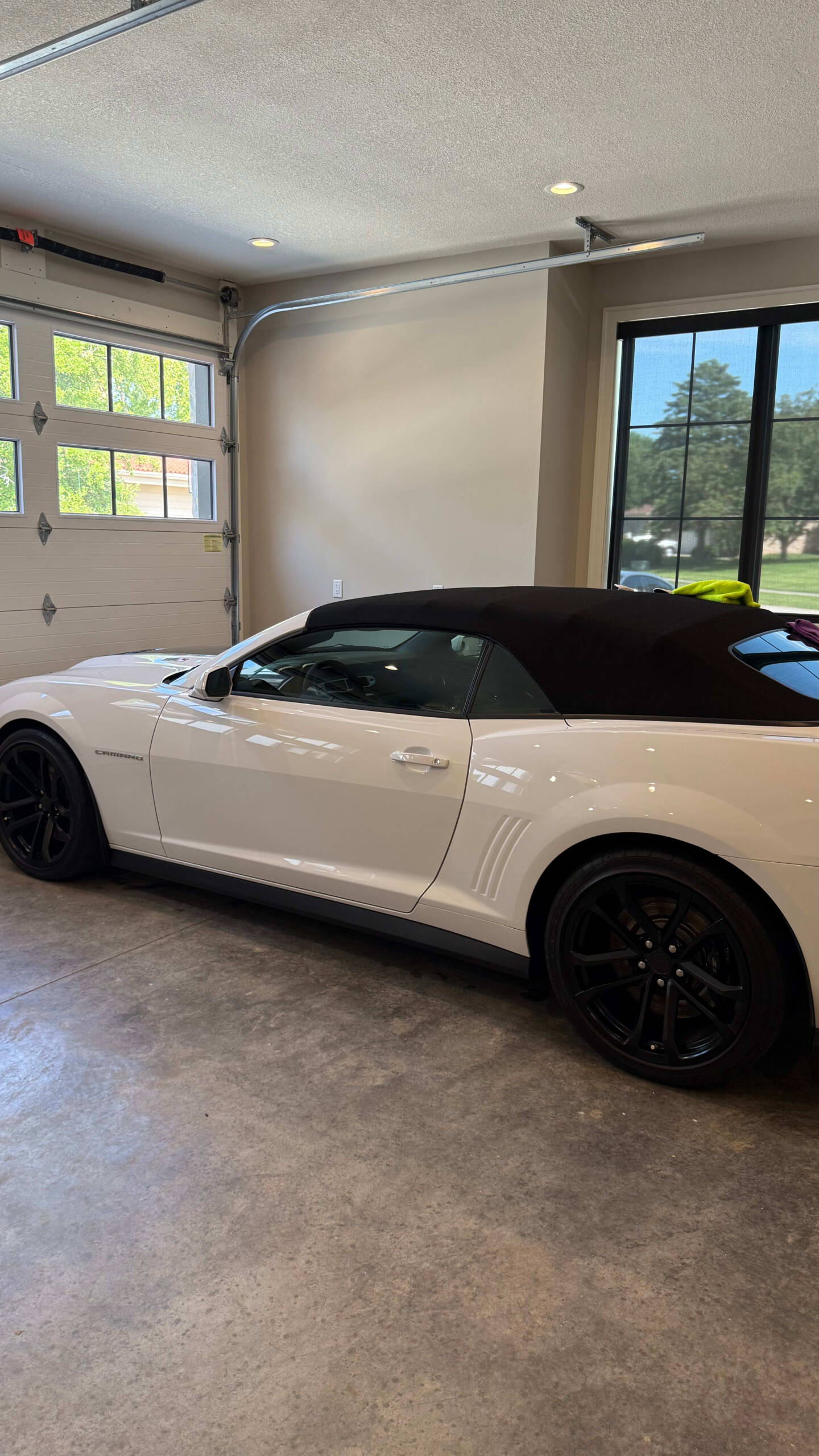
What is the difference between polish and wax?
Think of your clear coat like a wood tabletop. Over time it picks up fine scratches and a dull, hazy look. Polish is like a very fine sanding that smooths the top so it reflects light evenly again. Wax is like the finish you wipe on afterward to protect the wood and make it shine.
Polish contains tiny abrasives. When it is worked into the paint, usually with a machine polisher, those abrasives level the surface around swirl marks, light scratches, water spot etching and oxidation. The result is deeper gloss and clarity. Polish does not leave behind meaningful protection. The paint is cleaner and smoother, but bare.
Wax has no real cutting ability. It is a blend of natural waxes like carnauba, oils and sometimes polymers that sits on top of the paint. It fills in tiny imperfections a little, adds warmth and shine, makes water bead, and gives a sacrificial layer that takes the hit from UV, rain and road grime instead of your clear coat. It wears off over weeks.
Polish vs wax at a glance
| Question | Polish | Wax |
|---|---|---|
| Main job | Corrects the paint surface | Protects the paint surface |
| Abrasive? | Yes, fine abrasives | No |
| Removes swirls and light scratches | Yes | No, it can only hide them a little |
| Adds protection | No, leaves paint bare | Yes, a thin sacrificial layer |
| Makes water bead | No | Yes |
| How it is applied | Usually a machine polisher and pads | By hand or machine, then buffed off |
| How long results last | Correction lasts until new damage occurs | Usually weeks, depending on product and weather |
| Order in a detail | After wash and clay, before protection | Last, on clean polished paint |
| Risk if done wrong | Can remove too much clear coat or leave haze | Streaks or residue in trim |
Does your car need polish, wax or both?
Go outside on a sunny day, or use a flashlight at night, and look at the paint from an angle.
- You see fine circular scratches, spiderwebs, haze or dull areas. Your paint needs polish. Wax will not remove any of that.
- The paint looks clear and glossy, but water no longer beads and it gets dirty fast. Your paint needs protection, like wax, a sealant or a coating.
- You see swirls and water just sheets off flat. You need both, in the right order: polish first, then protect.
- The car is new or freshly corrected. Usually no polish is needed. Protect it now so it stays that way.
A quick touch test helps too. After washing, put your hand in a thin plastic sandwich bag and run it across the hood. If it feels gritty, the paint needs a clay bar before you do anything else.
What is the right order for polishing and waxing a car?
- Wash. A thorough two-bucket hand wash with a pH-neutral shampoo.
- Decontaminate. Iron remover and a clay bar take off bonded grit that would otherwise get dragged around by the polishing pad.
- Inspect. Look at the paint under good light to decide how much correction it needs.
- Polish. Work panel by panel with a machine polisher, using a cutting compound first if defects are heavy and a finishing polish after.
- Wipe down. Remove polishing oils with a panel prep spray so you can see the true finish and so protection bonds properly.
- Protect. Apply wax, a paint sealant or a ceramic coating.
Doing it backward is the classic mistake. Waxing first and then polishing just removes the wax you applied. Polishing and then skipping protection leaves fresh, bare clear coat exposed to sun and road film.
What about “polish and wax” all-in-one products?
All-in-one products, often called cleaner waxes, combine a light chemical cleaner or very mild abrasive with a protective wax or polymer. They are a reasonable shortcut for a car in decent shape. They can brighten paint a little and add some protection in one step.
What they cannot do is real correction. The abrasive is too light to remove more than the faintest marks, and the protection is thinner and shorter lived than a dedicated product. They are a maintenance product, not a fix for swirled or oxidized paint.
Is glaze the same as polish?
No. A glaze is an oily filler product that temporarily fills swirls and adds wet-looking gloss, often used for car shows and photos. It hides defects instead of removing them, and it washes away quickly. It can make paint look great for a weekend, but the swirls come back once it is gone.
Is a paint sealant better than wax?
This is where our own options come in. Traditional carnauba wax gives a warm glow but tends to wear off within weeks, especially through Illinois summers and salted winter roads. A synthetic paint sealant bonds more tightly and generally lasts longer, while still adding gloss and water beading. That is why our exterior detail finishes with a paint sealant applied panel by panel after the hand wash and clay bar, protecting the paint for months.
For the longest protection, a ceramic coating goes a step further and can last one to five years depending on the package. We cover how those two compare in detail in our guide to ceramic coating versus wax, which you can read in ceramic coatings vs traditional wax.
How do our polish and protection options compare?
Here is how the services we actually offer map to polish and wax, using the prices published on our site.
| Service | Polishing | Protection | Price |
|---|---|---|---|
| Maintenance wash | None | Quick detailer spray after hand dry | $60 to $120 |
| Exterior detail | None, clay bar decontamination only | Paint sealant | $179 to $499 |
| Paint correction, Stage 1 enhancement polish | Single-stage finishing polish | Pairs with sealant or coating | Quoted per vehicle |
| Paint correction, Stage 2 and full correction | Compound cut plus finishing polish, or multiple stages | Pairs with sealant or coating | Quoted per vehicle |
| Ceramic coating | Light polish included if needed during prep | System X ceramic coating, 1 to 5 years | $600 to $1,500 |
In plain terms: if your car needs shine and protection but the paint is in good shape, an exterior detail is the right fit. If your paint has swirls you can see in the sun, you need paint correction, and then protection on top.
Can you polish a car too much?
Yes. Because polish removes a tiny layer of clear coat each time, polishing a car over and over, especially with aggressive compounds, thins the clear coat. Factory clear coat is thin to begin with. That is why correction should be done once properly and then followed by protection and safe washing, rather than repeated every few months. Wax, on the other hand, can be applied as often as you like, since it adds a layer rather than removing one.
How often should you polish or wax your car?
Polish: only when the paint has visible defects. For most well-maintained cars that is once, then rarely again, if ever, as long as the car is washed properly.
Wax: every one to three months is typical, more often if the car sits outside or sees a lot of highway miles. Sealants stretch that to several months. Coatings stretch it to years.
In Central Illinois, a good rhythm is to have fresh protection on before winter salt season and again in spring once the salt is washed off.
Can you polish or wax a car by hand?
Waxing by hand works fine. Apply a thin, even layer with a foam applicator, let it haze according to the directions, and buff it off with a clean microfiber.
Polishing by hand is a different story. Hand polishing can improve gloss slightly and remove the faintest marks, but it does not generate the consistent speed and pressure needed to level real swirls. For visible defects, a dual-action machine polisher is the tool that makes the difference. If you have never used one, practice on a junk panel first, or let a professional handle it on your daily driver.
What happens during a Stage 1 enhancement polish?
The single-stage enhancement polish is the lightest level of paint correction we offer, and it is the one most daily drivers need. The car gets a full hand wash, an iron decontamination spray and a clay bar so the surface is completely clean. We inspect each panel under dedicated lighting, run a test spot to confirm the pad and polish combination, then machine polish panel by panel with a finishing polish. An isopropyl alcohol wipe-down removes the polishing oils so we can check the true result before any protection goes on.
It improves gloss and clarity and takes care of light swirls, minor water spots and light oxidation. It is also the standard prep before a coating. Cars with deeper swirls, light scratches or water etching usually need the two-stage correction, which adds a compound cut before the finishing polish.
Polish vs wax for a daily driver versus a weekend car
How you use the car changes the answer. A daily driver that commutes on I-74 or sits in a parking lot on campus all day collects more road film, bug splatter and UV exposure. For that car, the priority is durable protection that does not need reapplying every few weeks, so a sealant or a ceramic coating usually makes more sense than wax. Polish is a one-time fix if the paint is already swirled.
A weekend or show car that lives in a garage is a different story. Owners of those cars often enjoy waxing as a hobby and like the warm look of carnauba. They may also have paint that is already nearly perfect, so polishing is reserved for touching up the occasional mark.
Should you wax or seal your car before winter?
Yes. Fall is the most important time of year to put protection on paint in Central Illinois. Brine and rock salt spray coat the lower panels for months, and a protected surface releases that grime far more easily when it is washed. Polish, if your paint needs it, should happen before the protection goes on, ideally on a mild fall day before temperatures drop too low for products to cure properly.
When should you call a pro?
- You can see swirls, haze or water spot outlines in the sun.
- You have never used a machine polisher.
- The car is dark-colored, where every polishing mistake shows.
- You plan to put a ceramic coating on and want the paint perfect underneath it.
- You want protection that lasts longer than a few weeks.
Key takeaways
- Polish removes defects by leveling the clear coat. Wax adds protection on top.
- Wax cannot remove swirls, and polish does not protect.
- Always wash, clay, polish, then protect, in that order.
- Sealants and ceramic coatings are longer-lasting alternatives to traditional wax.
- Polish only when needed, since every round removes a little clear coat.
Frequently asked questions
Should I polish my car before waxing it?
Yes, if the paint has swirls, haze or light scratches. Polishing first removes those defects, then wax or sealant protects the corrected surface. If you wax first and polish afterward, the polish simply removes the wax. If the paint already looks clear and glossy, you can skip polish and just wax.
Does wax remove scratches?
No. Wax can fill the very finest marks and make them a little less visible for a short time, but it does not remove anything. Scratches that are within the clear coat need polishing to level the surface around them. Deeper scratches that catch a fingernail may need touch-up paint or body shop work.
Is car polish bad for paint?
Not when used correctly. Polish is designed to remove a microscopic amount of clear coat to restore gloss. Problems happen with aggressive products, poor technique or repeated polishing over the years, which can thin the clear coat. One proper correction followed by good washing habits keeps paint healthy for a long time.
How long does car wax last?
Traditional carnauba wax usually lasts a few weeks to about two months, depending on the product, weather and how often the car is washed. Cars parked outside through Illinois summers and salted winters lose it faster. Synthetic sealants generally last longer, and ceramic coatings last years with proper maintenance.
What is the difference between compound, polish and wax?
Compound is the most abrasive and removes heavier defects. Polish is finer and refines the paint to high gloss, often after compounding. Wax has no cutting ability and only protects. A full correction might use compound, then polish, then a wax, sealant or ceramic coating as the protective final layer.
Do new cars need to be polished?
Many do not, but some arrive with light swirls from dealer washing or transport. Look at the paint in direct sun before deciding. If it is clean and clear, skip polish and protect it right away. If you see haze or swirls, a light enhancement polish before protection is worth it.
Can I use polish and wax on a ceramic coated car?
Avoid abrasive polish on a coated car, because it can wear the coating down. Wax is generally unnecessary, and some waxes can mask the coating’s water behavior. Instead, use a pH-neutral wash and a coating-friendly spray product if you want extra slickness. Polishing is only done if the coating is being removed or reapplied.
Is a polish and wax combo product good enough?
For a car in good shape, an all-in-one cleaner wax is a reasonable time saver that adds some shine and short-term protection. It will not remove noticeable swirls, and its protection does not last as long as a dedicated wax, sealant or coating. Think of it as maintenance rather than correction.
How much does it cost to have a car polished?
At The Detail Docs, paint correction is quoted per vehicle because the work depends on size, paint condition and how much correction you want, from a single-stage enhancement polish to multi-stage correction. Texting a few photos of the paint in sunlight is the fastest way to get an accurate number.
Does polishing make paint thinner?
Technically yes, by a tiny amount each time, because it removes a microscopic layer of clear coat. A careful single correction removes very little. That is why professionals test a panel first, use the least aggressive method that works, and recommend protecting the paint afterward instead of polishing it repeatedly.
Find out if your paint needs polish or protection
Not sure whether your paint needs polishing, protection or both? Send us a couple of photos taken in the sun and we will tell you straight. The Detail Docs works on site at homes and businesses in Champaign, Urbana, Savoy, Mahomet, Rantoul, Tolono, St. Joseph and throughout Champaign County, and we also cover Danville and Monticello. Everything is done in your driveway with our own water and power, and payment is due only after you have seen the finish. Book a paint assessment and detail or text 217-418-4769.