
Quick answer: Compound and polish are both abrasives, but compound cuts faster and removes deeper defects like heavy swirls, light scratches and oxidation, while polish uses finer abrasives to refine the surface and bring back gloss. Compound usually leaves light haze behind, so polish follows it. Lightly marked paint often needs polish alone.
Once you know your paint needs correcting rather than just protecting, the next question is how much cutting it needs. That is the real difference between compound and polish. They are made from the same basic idea, abrasive particles suspended in a liquid or cream, but they are built for different stages of the job. Picking the right one, or the right combination, decides whether you end up with crisp, glossy paint or paint that still shows swirls, or worse, paint that was cut more than it needed to be.
This guide explains the difference in plain terms, how to judge which one your paint needs, and how compound and polish line up with the paint correction levels we offer at The Detail Docs. It is written for owners in Champaign County who want to understand what they are paying for before booking.
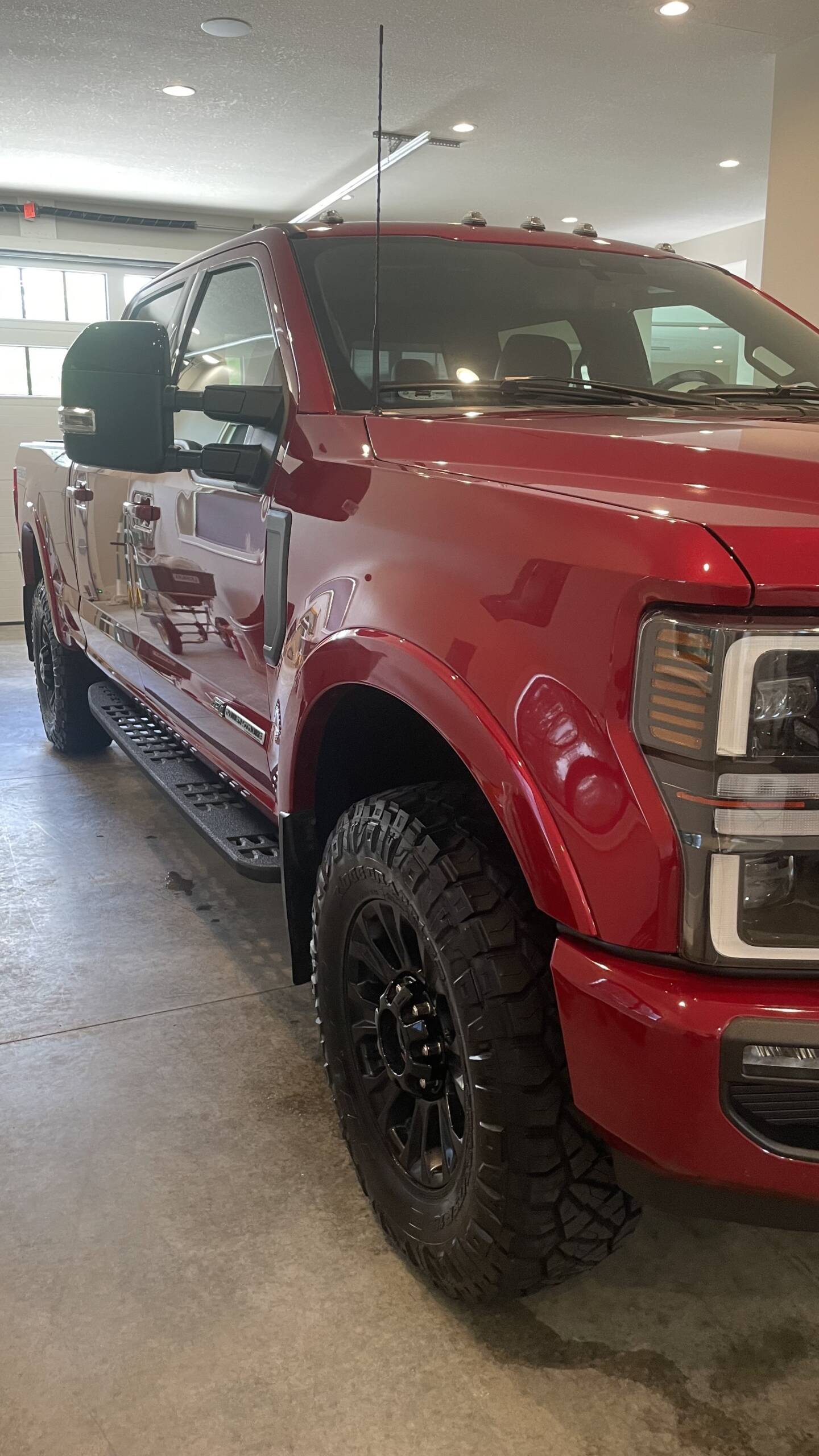
What is the difference between compound and polish?
Compound, sometimes called cutting compound or rubbing compound, has larger or more aggressive abrasives. Its job is to remove clear coat quickly enough to level out deeper defects: heavy swirl marks, random deep scratches within the clear coat, water spot etching, bird dropping etching and oxidation on neglected paint. It works fast, but it rarely leaves a perfect finish on its own. Most compounds leave behind faint haze or micro-marring, especially on dark or soft paint.
Polish has finer abrasives that remove much less material. Its job is to refine. It takes the slightly hazy surface left by compound, or a lightly marked surface on a car in good shape, and brings it to high clarity and gloss. Used on its own, polish handles light swirls, minor marring and haze.
The simplest way to think about it: compound is coarse sandpaper, polish is fine sandpaper. You use the coarse grit to remove the damage and the fine grit to remove the marks the coarse grit left.
Compound vs polish side by side
| Factor | Compound | Polish |
|---|---|---|
| Cutting ability | High | Low to medium |
| Best for | Heavy swirls, light scratches, etching, oxidation | Light swirls, haze, refining after compound |
| Finish it leaves | Often slight haze or micro-marring | High gloss and clarity |
| Clear coat removed | More per pass | Very little per pass |
| Typical pad | Cutting pad, foam or microfiber | Polishing or finishing pad |
| Used alone? | Rarely, usually followed by polish | Often, on lightly marked paint |
| Risk | Higher, easier to overdo on thin paint and edges | Lower, but still removes clear coat |
| Which correction level | Two-stage and full correction | Every level, including single-stage |
How do you know if your paint needs compound or just polish?
Detailers decide this panel by panel, but you can get a good idea yourself.
- Wash and clay the car. You cannot judge paint that is still covered in film and bonded grit.
- Look under strong light. Direct sun, an LED flashlight or a work light held at an angle shows swirls clearly.
- Judge the density. A few light swirls you only see in the sun usually need polish only. Swirls that cover every panel like a spiderweb and show even in shade usually need compound first.
- Try the fingernail test on scratches. Drag a fingernail gently across a scratch. If it does not catch, the scratch is likely in the clear coat and correctable. If it catches, it may be too deep for compound alone.
- Look for dullness. Faded, chalky or flat-looking paint, common on older red and black cars parked outside, points to oxidation and usually needs compound.
Professionals also do a test spot. They start with the least aggressive pad and product on one small section. If that removes the defects, they use it on the whole car. If not, they step up to compound. This keeps as much clear coat on the car as possible.
What is the difference between rubbing compound and polishing compound?
This is one of the most searched versions of the question, and the names make it confusing. “Rubbing compound” is the older, more aggressive type, traditionally used by hand or with a rotary buffer to remove heavy oxidation and sanding marks. “Polishing compound” is a finer product closer to what most detailers simply call polish. Many modern products blur the line, and some are designed to cut and finish in one step.
The labels matter less than the result on your paint. What counts is how much the product cuts with the pad and machine you are using, and whether it finishes down cleanly. That is why test spots matter more than what the bottle says.
Can you use compound without polish afterward?
You can, but you usually should not. Compound removes the defects you were worried about, but it often replaces them with a fine haze that looks like a dull film in the sun. On light silver or white paint it may be hard to see. On black, dark blue or red it is obvious. A finishing polish removes that haze and brings back true depth. Skipping it is the most common reason home correction jobs look “cleaner but not glossy.”
There are exceptions. Some modern one-step products cut and finish well enough on certain paints that no separate polish step is needed. A good detailer finds that out with a test spot rather than assuming.
Is it safe to use compound on car paint?
Yes, when it is the right tool for the job and used carefully. The risk is that compound removes clear coat faster, and clear coat is thin. The danger spots are:
- Edges and body lines, where paint is thinnest and a pad can cut through quickly.
- Older or repainted panels, which may have less clear coat than you think.
- Heat buildup from staying in one area too long or pressing too hard.
- Rotary buffers in inexperienced hands, which can burn through paint in seconds.
A dual-action polisher is much more forgiving and is what most enthusiasts should use. Taping off edges and trim, keeping the pad flat and moving, and checking your work often all reduce risk.
How compound and polish fit our paint correction levels
Our paint correction service is offered at three levels, and the main difference between them is how much compounding is involved.
| Correction level | What is used | Best for |
|---|---|---|
| Stage 1 enhancement polish | Single-stage finishing polish | Light swirls, minor water spots, light oxidation, prep before a coating |
| Stage 2 two-stage correction | Compound cut, then finishing polish | Moderate swirls, light scratches, water etching, buffer trails |
| Full multi-stage correction | Aggressive compound followed by multiple finishing stages | Heavy swirls, deeper scratches within the clear coat, severe oxidation, show cars |
Every level starts the same way: a full decontamination wash with iron remover and clay bar, inspection under dedicated lighting, and a test panel. After polishing, each panel is wiped with isopropyl alcohol so we can see the true finish, and we inspect again before calling it done. Pricing is quoted per vehicle based on size, paint condition and the level you choose, and time on site runs from about 3 to 8 or more hours.
Why does compound vs polish matter before a ceramic coating?
A ceramic coating locks in whatever finish is under it for years. If you coat over paint that still has swirls or compound haze, you are sealing those flaws in. That is why the correction level matters so much before coating. Most cars getting a ceramic coating need at least a single-stage polish, and swirled daily drivers often benefit from a compound and polish combination first.
We explain the bigger picture of correction plus protection in our post on paint correction vs ceramic coating.
Can you compound and polish by hand?
Hand application can soften very light defects and is fine for a small spot, like a scuff on a bumper corner. But it is slow and inconsistent over a whole car, and it rarely removes real swirls evenly. Machine polishers spin the pad at a controlled speed and pressure across every panel, which is why correction is a machine job. If you only need a small area fixed and want to try it yourself, use a finishing polish first and only move to compound if it does not work.
What defects can compound not fix?
Compound only works within the clear coat. It cannot fix:
- Scratches that go into the color coat or down to primer or metal.
- Rock chips, which are missing paint rather than surface marks.
- Clear coat that is peeling, flaking or failing, common on older cars left outside for years.
- Dents and dings.
Those need touch-up paint, paintless dent repair or body shop work. A good detailer will point these out before starting so you are not paying for correction that cannot help.
How much clear coat does correction remove?
Less than most people fear, when it is done carefully. A finishing polish removes a tiny fraction of the clear coat. A compound step removes more, but a skilled detailer uses only as much cut as each panel needs, and some panels need none. The concern is not one careful correction. It is repeated aggressive correction over the years, or a heavy cut on edges and body lines where paint is thinnest. That is why the goal after correction is to protect the paint and wash it safely, so it does not need cutting again.
Does compound vs polish change for different paint colors and types?
Paint is not all the same. Some factory clear coats are hard and take more cutting to correct, while others are soft and mar easily, even from a polishing pad. Dark colors show every bit of haze, so they almost always need a careful finishing step. Light colors like white and silver hide swirls well, which means owners often do not realize how much correction the paint needs until it is next to a corrected panel.
Trucks and SUVs, which are common around Champaign County farm roads and job sites, often have larger panels with more wash-induced swirling and sometimes oxidation on the roof and hood. Matching the level of cut to each panel, rather than using one approach for the whole vehicle, gives the best result while removing the least clear coat.
What should you ask before booking paint correction near you?
Whoever you hire, a few questions tell you whether they will cut only what the paint needs:
- Will you do a test spot before polishing the whole car?
- Which correction level do you recommend for my paint, and why?
- How do you inspect the paint, and under what kind of lighting?
- What protection goes on afterward, and how long does it last?
- What defects will not come out, like chips or scratches through the clear coat?
Clear answers to those questions matter more than any before-and-after photo. They show the detailer is thinking about your clear coat, not just the finish on the day.
When should you call a pro?
- You see swirls on every panel or the paint looks dull and chalky.
- The car is dark-colored, where compound haze shows clearly.
- You do not own a dual-action polisher or have not used one before.
- The car has older or repainted panels where clear coat thickness is uncertain.
- You are preparing the car for a ceramic coating.
If the paint just needs a deep clean and sealant rather than correction, our exterior detail covers the wash, clay bar and sealant without any cutting.
Key takeaways
- Compound cuts faster and removes deeper defects. Polish refines and adds gloss.
- Compound usually leaves haze, so it is followed by polish.
- Lightly marked paint often needs polish alone.
- Test spots decide the least aggressive method that works.
- Neither can fix scratches through the clear coat, chips or failing clear coat.
Frequently asked questions
Do I need to use compound before polish?
Only if the paint has defects that polish alone cannot remove, such as heavy swirls, light scratches, etching or oxidation. If a test spot with polish clears the defects, compound is not needed. Starting with the least aggressive option protects your clear coat and often saves time on paint that is in decent shape.
Can compound damage clear coat?
It can if it is overused. Compound removes clear coat faster than polish, so heavy pressure, too much heat, repeated passes, or working on thin edges and body lines can cut too deep. Used with a dual-action polisher, a test spot and good technique, compound safely removes defects without harming healthy factory paint.
Will polish alone remove swirl marks?
Polish alone removes light swirl marks and haze, especially on paint that has been washed carefully most of its life. Moderate to heavy swirls usually need a compound step first. Polish then refines the surface. A test spot on one panel tells you quickly whether polish by itself will be enough.
How long does a compound and polish take?
For us, paint correction typically takes from about 3 to 8 or more hours depending on vehicle size, paint condition and correction level. A single-stage polish on a clean car is on the shorter end. A two-stage compound and polish, or a full correction on a larger vehicle, takes the longest.
Is cutting compound the same as rubbing compound?
They are often used to mean the same thing: an aggressive abrasive meant to remove heavier defects. Rubbing compound is the older name, often associated with hand use and rotary buffers. Modern cutting compounds tend to finish more cleanly. The actual cutting strength varies by product, pad and machine, so testing matters more than the label.
What happens if you skip polishing after compound?
The paint usually looks cleaner but slightly hazy or dull, especially in direct sun and on dark colors. That haze is fine marring left by the compound. A finishing polish removes it and restores clarity and depth. If you are applying a ceramic coating, skipping this step means locking that haze in.
Can compound remove oxidation from car paint?
Yes, oxidation that is still within the clear coat responds well to compound. It removes the dull, chalky top layer and reveals healthy clear coat underneath, then polish restores gloss. If the clear coat itself is peeling or flaking, compound cannot fix it, and the panel needs to be refinished by a body shop.
Do I need a machine to use compound?
For more than a small spot, yes. Hand application of compound can soften a small scuff, but it cannot level swirls consistently across a whole panel. A dual-action polisher is the safest and most practical tool for enthusiasts, and professionals use machines for every correction job to get even results.
What should I put on paint after compound and polish?
Protection, every time. Correction leaves the clear coat bare and clean, so apply a paint sealant, wax or ceramic coating right after. A coating gives the longest protection and keeps the corrected finish looking sharp for years with proper washing, while a sealant is a lower-cost option that lasts months.
Which correction level is right for my car?
Daily drivers with light swirls usually need the Stage 1 enhancement polish. Cars with visible swirls on every panel, light scratches or water etching usually need Stage 2. Heavily neglected paint or show cars may need full correction. Sending us photos in sunlight or having us inspect it in person gives you a firm recommendation.
Get a straight answer on how much cut your paint needs
We would rather remove too little than too much. The Detail Docs inspects your paint under lighting, runs a test panel and recommends the lightest correction level that gets the result you want. We come to you in Champaign, Urbana, Savoy, Mahomet, Rantoul, Tolono, St. Joseph and other Champaign County towns, plus Danville and Monticello, and pricing is quoted per vehicle before any polishing starts. Request a paint correction quote or text a few sunlight photos to 217-418-4769.
