
Quick answer: A proper hand wash is safer and more thorough than a touchless car wash. Touchless washes avoid brush scratches but rely on strong chemicals and high pressure, which can wear down wax and coatings and still leave road film and water spots. A careful two-bucket hand wash removes more grime and is gentler on paint.
Most people pick a car wash based on convenience. There is one on the way home, it takes five minutes, and the car comes out looking cleaner. But if you care about how your paint looks in two or three years, the method matters more than the speed. The two options people compare most often are a careful hand wash and a touchless automatic wash, the kind where nothing but water and chemicals touch the car.
Touchless washes are often sold as the “safe” automatic option, and compared to brush tunnels they usually are. But they are not the same as a good hand wash. This guide compares the two methods honestly, explains where each one fits, and shows how the hand wash services we offer at The Detail Docs line up, so you can choose what is right for your car around Champaign County.
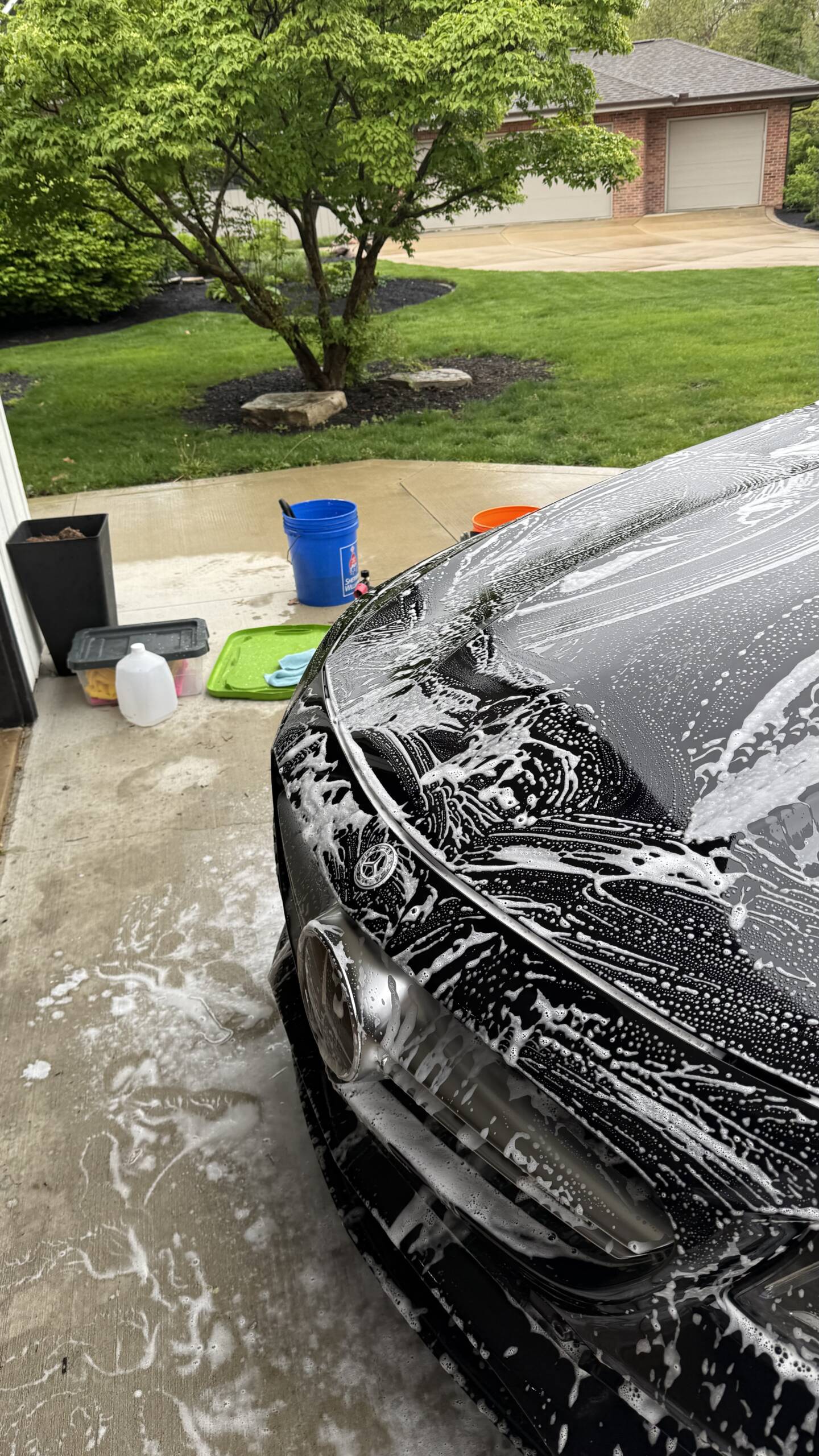
What is a touchless car wash?
A touchless car wash cleans the car without brushes, cloth strips or mitts. Instead it uses a sequence of chemical sprays and high-pressure water. Typically a strong pre-soak, often alkaline, is sprayed on to loosen dirt, sometimes followed by a second, acidic chemical. High-pressure jets then blast the loosened grime off, and the car finishes with a rinse and a blower. Some include a spray wax or drying agent.
The appeal is clear: nothing physically rubs the paint, so there is far less risk of the swirl marks that brush tunnels are known for. It is also fast and available any time of day.
What is a proper hand wash?
A proper hand wash, the kind a detailer does, uses a pH-neutral car shampoo, two buckets (one with soapy water, one with clean rinse water for the mitt), a soft microfiber wash mitt and a careful top-to-bottom process. Wheels are cleaned with separate tools so brake dust never touches the paint. The car is then dried by hand with clean microfiber towels or a blower so no water is left to spot.
The physical contact of a soft mitt is what removes the thin layer of road film that sprays alone leave behind. Done carelessly, with one dirty bucket or a gritty sponge, a hand wash can cause scratches. Done properly, it is the gentlest thorough way to clean paint.
Hand wash vs touchless car wash compared
| Factor | Proper hand wash | Touchless automatic wash |
|---|---|---|
| How it cleans | pH-neutral soap and a soft mitt | Strong chemicals and high-pressure water |
| Removes road film | Yes, contact lifts it off | Partly, a thin film often remains |
| Swirl and scratch risk | Low with the right method, higher if done carelessly | Low from contact, but grit can be blasted across paint |
| Effect on wax, sealant and coatings | Gentle, preserves protection | Harsh chemicals can wear protection faster |
| Wheels and lower panels | Cleaned by hand with separate tools | Often missed or partly cleaned |
| Drying | Hand dried with microfiber or blower | Blower, often leaves drops that spot |
| Time | About 45 minutes to 1.5 hours for our maintenance wash | A few minutes |
| Best use | Regular care, coated or corrected paint, dark cars | Quick rinse between proper washes, winter salt rinse |
Is a touchless car wash safe for your paint?
Safer than a brush wash, yes. Completely harmless, not always. The concerns are not about touch, they are about chemistry and pressure:
- Harsh chemicals. Because there is no contact, touchless systems rely on stronger soaps to break dirt loose. Repeated exposure can strip wax and sealants and shorten the life of coatings.
- Leftover film. Spraying alone rarely removes the thin, oily traffic film bonded to paint. The car looks clean wet and slightly dull once dry.
- Water spots. Many automatic washes rinse with untreated water, and blowers miss drops around mirrors, trim and badges.
- High pressure near trim. Pressure can force water into seals and push grit around if the car is very dirty going in.
For an occasional quick rinse, a touchless wash is a reasonable option. As the only way a car is ever washed, it tends to leave paint less protected and less clean over time.
Is a hand wash always better than a touchless wash?
Only when the hand wash is done right. A hand wash with one bucket, a dish sponge, dish soap and an old bath towel can do more damage than a touchless wash. The method makes the difference:
- Rinse the car first to knock off loose dirt.
- Clean the wheels and tires first, with separate brushes and a separate bucket.
- Use a pH-neutral car shampoo, never dish soap.
- Use two buckets so the mitt is rinsed before it goes back into the soap.
- Wash from the roof down, saving the dirtiest lower panels for last.
- Rinse thoroughly and dry right away with clean microfiber or a blower.
That is the same process behind our maintenance wash: a pH-neutral hand wash and rinse, exterior glass, wheels and tires with tire dressing, a microfiber hand dry, a quick detailer spray for gloss and an interior trash-out and wipe of visible surfaces.
Which is better for a ceramic coated car?
A hand wash with pH-neutral soap is what a ceramic coating is designed for. It keeps the coating’s water beading and slickness working for its full life. Touchless washes are better for coated cars than brush tunnels, and an occasional one will not ruin a coating, but the stronger chemicals can gradually dull its performance. Brush-type automatic washes can scratch and degrade a coating over time, so we recommend avoiding them entirely.
If you have invested in a ceramic coating, a regular hand wash every two to four weeks is the simplest way to protect that investment.
What about winter and road salt?
This is where touchless washes earn their place. In a Central Illinois winter, getting salt and brine off the car quickly matters, and a touchless wash with an underbody spray on a day above freezing is a practical way to do it between hand washes. It is better than leaving salt on the car for weeks. Just know it is a rinse, not a thorough clean. Follow up with a proper wash when the weather allows, and keep protection on the paint through the season. Our guide to protecting your car from Illinois road salt covers this in more detail.
Our wash options compared
We only offer hand washes, but there are two levels depending on what your car needs.
| Service | What it covers | Time | Price |
|---|---|---|---|
| Maintenance wash | pH-neutral hand wash, glass, wheels and tires, hand dry, quick detailer, interior trash-out and wipe-down | 45 min to 1.5 hours | $60 sedan or coupe, $80 SUV, truck or van, $120 oversized or luxury |
| Exterior detail | Two-bucket hand wash, clay bar decontamination, wheels and tires, glass, trim restoration, paint sealant | 2 to 4 hours | $179 to $499 |
The maintenance wash is for keeping a car clean between details. The exterior detail is the deeper reset that removes bonded contamination and puts fresh protection on. For more on how washing differs from detailing in general, see car wash vs car detailing.
How often should you hand wash your car?
Every two to four weeks works for most cars. Cars parked outside, driven daily, or coated benefit from staying on the shorter end of that range. In summer, bug splatter, bird droppings and tree sap make more frequent washing worthwhile because they can etch paint. In winter, wash whenever temperatures allow to keep salt from sitting on the car.
Does a mobile hand wash use a lot of water?
A careful hand wash uses a measured amount of water from buckets and a controlled rinse rather than a constant spray. We bring our own water supply and power to every job, so we do not need to use your outdoor spigot or outlet, and we can wash in driveways, garages and parking lots. That also means you are not tying up your own hose or dealing with a wet driveway full of buckets on a weekday morning.
Hand wash vs touchless for dark-colored cars
Black, dark blue and dark gray paint shows everything: swirls, water spots and the dull film that sprays leave behind. Touchless washes tend to leave dark cars looking clean from a distance but flat up close, and blower drying often leaves a scatter of spots across the hood and roof. A careful hand wash and hand dry keeps dark paint looking deep and glossy, which is why owners of dark cars and freshly corrected paint usually stick to hand washing only.
Where do brush and soft-touch washes fit in?
Brush and soft-touch tunnel washes are a third option, and from a paint care point of view they are the riskiest. Spinning brushes and cloth strips touch hundreds of cars a day, and the grit from the car ahead of yours can end up dragged across your paint. Over months, that is the main source of the fine circular swirls you see on so many daily drivers in direct sun. They do remove road film better than touchless washes, because they make contact, but the trade-off is damage that later needs paint correction to remove. If your choice is between a brush tunnel and a touchless bay, the touchless bay is the gentler of the two.
How can you tell if your car wash is hurting your paint?
- Swirls in the sun. Fine circular scratches that catch the light are the classic sign of contact damage from brushes or poor washing.
- Protection disappearing fast. If water stops beading within a couple of weeks of waxing or sealing, harsh chemicals are likely stripping it.
- A gritty feel after washing. Run your hand inside a thin plastic bag across the clean hood. Grit means bonded film and contamination are staying behind.
- Spots on glass and dark panels. Mineral rings after every wash point to untreated rinse water and incomplete drying.
- Faded or chalky trim. Strong chemicals can dry out plastic trim over time.
Any of those signs means it is worth changing how the car is washed, and possibly booking a deeper exterior detail to reset the paint.
Can you hand wash a car when it is cold outside?
Yes, with some care. Below freezing, water can freeze on the paint, in door seals and in locks, so most hand washing in winter waits for a milder day. Washing in a garage, using warm water and drying the car completely, including door jambs and seals, keeps things from freezing afterward. On truly cold days, a quick rinse to get salt off is better than nothing, and the thorough hand wash can wait for a warmer afternoon.
What happens during a mobile maintenance wash appointment?
We arrive at the time you picked, set up next to the car with our own water and power, and get started. Wheels and tires come first, then a full hand wash and rinse of the body, the exterior glass, and a careful microfiber hand dry. A quick detailer spray adds gloss and picks up any remaining dust or smears, tires get dressed, and the inside gets a trash-out and a wipe of visible surfaces. You do not need to be home, as long as the car is accessible. Most customers carry on with their day and come back to a clean car.
When should you call a pro?
- You do not have the time, space or supplies for a proper two-bucket wash.
- You live in an apartment without hose access.
- Your car is coated, corrected or dark-colored and you want it washed safely.
- Touchless washes keep leaving film and spots on your paint.
- You want the inside tidied at the same time.
Key takeaways
- Touchless washes avoid brush scratches but use harsh chemicals and leave film behind.
- A proper two-bucket hand wash with pH-neutral soap is the gentlest thorough clean.
- Hand washing protects wax, sealants and ceramic coatings.
- Touchless washes are useful for quick winter salt rinses between proper washes.
- Avoid brush-type automatic washes on paint you care about.
Frequently asked questions
Are touchless car washes bad for your car?
Not bad, but not ideal as your only wash. They avoid the swirl marks brush washes cause, which is a real advantage. The downsides are strong chemicals that wear down wax, sealants and coatings faster, a thin layer of road film left behind, and water spots from incomplete drying. Occasional use is fine.
Is hand washing better than an automatic car wash?
A properly done hand wash is better than any automatic wash for paint condition and cleanliness. It removes bonded road film, is gentle on protection and gets wheels and lower panels clean. A careless hand wash with one bucket or dish soap can cause swirls, so the method matters as much as the choice.
Do touchless car washes remove all the dirt?
Usually not all of it. They remove loose dirt and much of the grime, but a thin, oily traffic film often stays bonded to the paint because nothing physically wipes it away. You can see it as a slight dullness once the car dries, or feel it by running a hand across the paint.
How much does a mobile hand wash cost?
Our maintenance wash is $60 for a sedan or coupe, $80 for an SUV, truck or van, and $120 for oversized or luxury vehicles. It includes a pH-neutral hand wash, glass, wheels and tires, a hand dry, a quick detailer spray and an interior trash-out and wipe-down, done wherever the car is parked.
Can a touchless car wash damage a ceramic coating?
An occasional touchless wash will not ruin a coating, but repeated exposure to strong pre-soak chemicals can gradually reduce its slickness and water beading. A hand wash with pH-neutral soap is what coatings are designed for. Brush-type automatic washes are the bigger risk and can scratch and degrade a coating over time.
What soap should I use to hand wash my car?
Use a pH-neutral car shampoo made for automotive paint. It cleans without stripping wax, sealants or coatings. Avoid dish soap, household cleaners and degreasers on paint, since they can strip protection and dry out trim. Use a separate wheel cleaner for wheels, which carry heavier brake dust.
Why does my car look dull after a touchless wash?
That dull look is usually leftover traffic film that the chemical spray loosened but did not fully remove, sometimes mixed with water spots from blower drying. A contact hand wash with a soft mitt removes the film, and drying with microfiber prevents spots, which brings back the gloss.
Is it OK to use a touchless wash in winter?
Yes, it is a practical way to get salt and brine off the car between proper washes, especially with an underbody spray. Go on a day above freezing so water does not freeze in door seals and locks. Follow up with a hand wash when the weather allows to remove the film the spray leaves.
How long does a professional hand wash take?
Our maintenance wash takes about 45 minutes to an hour and a half depending on the size and condition of the vehicle. That includes wheels, the hand wash, glass, a careful hand dry, a quick detailer spray and a quick interior tidy. An exterior detail, which adds a clay bar and sealant, takes two to four hours.
Does a hand wash remove water spots?
A hand wash removes fresh mineral deposits sitting on top of the paint and prevents new ones by drying the car properly. Older bonded spots or etched rings need a decontamination step or polishing. Regular hand washing with a careful dry is one of the best ways to stop water spots from building up.
A careful hand wash, wherever your car is parked
Skip the line at the wash bay. The Detail Docs brings a full hand wash setup, including our own water and power, to your driveway, office lot or apartment parking spot in Champaign, Urbana, Savoy, Mahomet, Rantoul, Tolono, St. Joseph and the rest of Champaign County, as well as Danville and Monticello. Evenings and weekends are available, and you pay when the wash is done. Set up your mobile hand wash or text 217-418-4769.

