
Quick answer: A one-step paint correction is a single machine polishing stage that boosts gloss and removes light swirls and haze. A two-step correction adds a compound cut before the finishing polish, so it removes much more: moderate swirls, light scratches and water etching. One-step costs less and takes less time. Two-step delivers a deeper, clearer finish.
When people get a paint correction quote, the first thing they usually see is a choice between levels. One-step, two-step, and sometimes a multi-stage option above that. The names sound technical, but the difference is simple once you see what happens on the paint. It comes down to how many polishing stages your car gets, how much of the damage each one removes, and how much time and money you want to put in.
At The Detail Docs, those levels are our Stage 1 enhancement polish, our Stage 2 two-stage correction, and full multi-stage correction. This guide explains the one-step and two-step options in plain language so you can decide which one fits your car, your plans for it, and your budget. It also covers how each one pairs with a ceramic coating, since that is the most common reason people book correction in Champaign County.
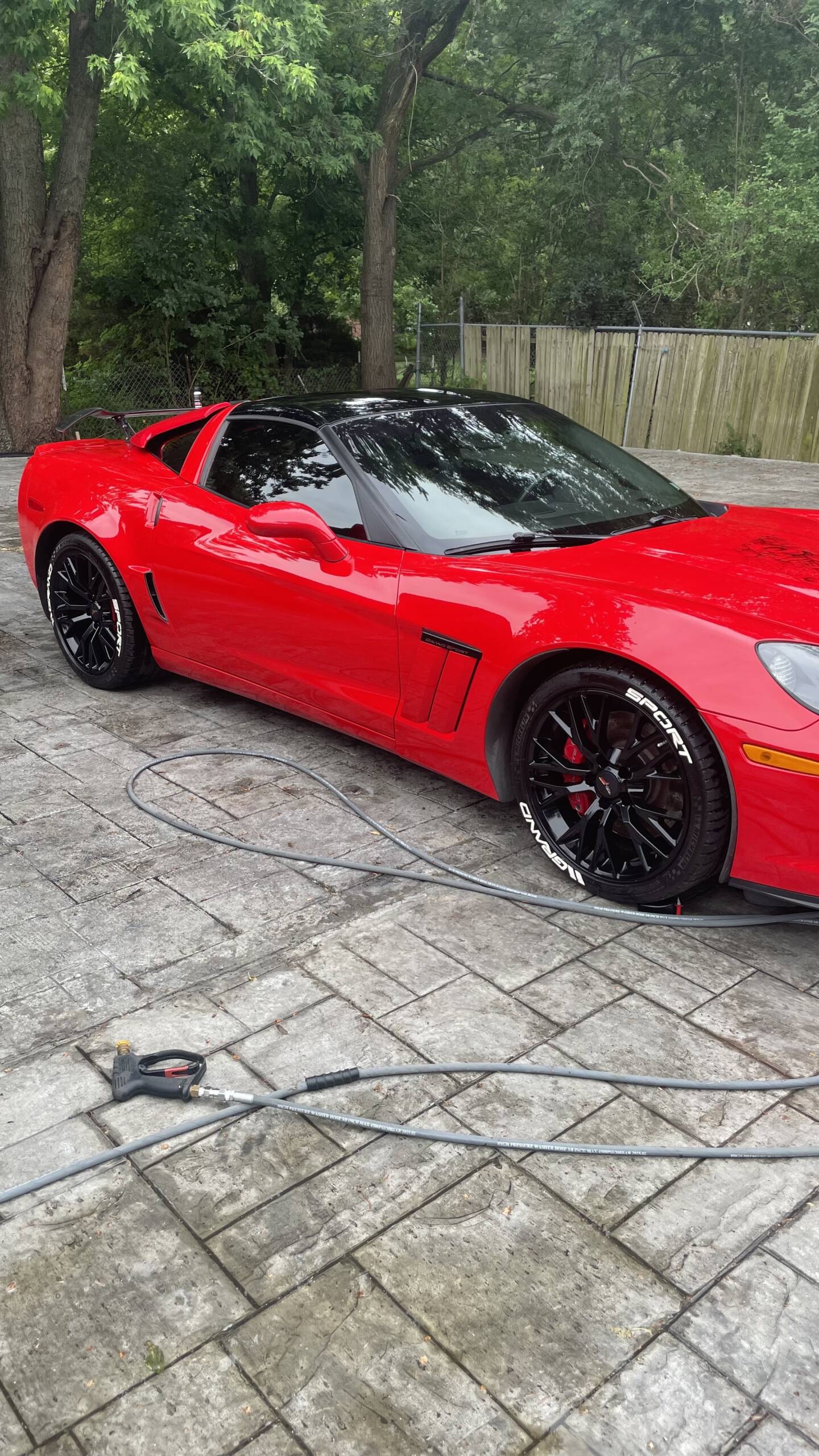
What is a one-step paint correction?
A one-step correction is a single pass of machine polishing over every painted panel, using one pad and product combination. With our Stage 1 enhancement polish, that is a finishing polish. Its goal is to improve clarity and gloss and remove the lightest defects, not to chase every mark.
It is the right choice for:
- Light swirl marks you only notice in direct sun.
- Minor water spots and light oxidation.
- Newer cars with light dealer or wash marring.
- Prepping well-kept paint before a ceramic coating.
- Owners who want a noticeable gloss upgrade without the time and cost of a full correction.
The trade-off is that deeper swirls and scratches will be reduced, not removed. On paint with heavy wash damage, a one-step brightens the car but you can still find defects under a flashlight.
What is a two-step paint correction?
A two-step correction uses two separate stages. The first is a compound cut, which removes the heavier damage by leveling the clear coat around it. The second is a finishing polish, which removes the light haze the compound leaves and brings the paint to full gloss and clarity. Our Stage 2 two-stage correction follows exactly that pattern.
It is the right choice for:
- Moderate swirl marks visible on every panel.
- Light scratches within the clear coat.
- Water spot etching and bird dropping marks.
- Buffer trails or holograms from previous bad polishing.
- Dark-colored cars, where defects and haze are most visible.
Because it removes more clear coat and takes more time, a two-step is used when the paint actually needs it, not by default.
One-step vs two-step paint correction compared
| Factor | One-step (Stage 1) | Two-step (Stage 2) |
|---|---|---|
| Polishing stages | One: finishing polish | Two: compound cut, then finishing polish |
| Defects it handles | Light swirls, minor water spots, light oxidation | Moderate swirls, light scratches, water etching, buffer trails |
| Result | Clear gloss improvement, some defects remain under close inspection | Much cleaner, deeper finish with most defects removed |
| Clear coat removed | Very little | More, but only where needed |
| Time on site | Shorter, often around 3 to 4 hours on a clean car | Longer, up to 6 to 8 or more hours on larger vehicles |
| Price | Quoted per vehicle, lower | Quoted per vehicle, higher |
| Before a ceramic coating | Good for well-kept or new paint | Best for swirled daily drivers and dark paint |
| Best owner fit | Leases, newer cars, budget-minded owners | Long-term owners, enthusiasts, dark cars |
How do you choose between one-step and two-step?
Ask yourself four questions.
- What does the paint look like in the sun? If you have to search for swirls, a one-step likely does the job. If they jump out at you, plan on two-step.
- How long are you keeping the car? If you are selling within a year, a one-step gives a strong visual lift for less. If you are keeping it for years, a two-step paired with a coating makes the most of the investment.
- What color is it? White, silver and light gray hide defects well, so a one-step can look excellent. Black, dark blue, dark gray and deep red show everything, which favors two-step.
- Are you coating it afterward? A coating locks in the finish for years. If you would be bothered by leftover swirls under the coating, choose two-step.
The most reliable answer still comes from a test spot. We polish a small section with the lighter approach first. If the result is good enough for you, there is no reason to cut more.
What happens during each correction level?
Both levels share the same prep and finish, which is where a lot of the quality comes from.
- Full decontamination wash. Hand wash, iron decontamination and clay bar so no bonded grit gets dragged under the pad.
- Paint inspection under lighting. Every panel is checked to map swirls, scratches, water spots and oxidation.
- Test panel. One spot confirms the pad and product combination is getting the result without over-cutting.
- Machine polishing. One stage for a one-step. For a two-step, a compound stage across every panel, then a finishing polish stage.
- IPA wipe-down. Each panel is wiped with isopropyl alcohol to remove polish oils and reveal the true finish.
- Final inspection. Anything that needs another pass gets it before the job is finished.
You can read the full process and see example results on our paint correction in Champaign County page.
What about full multi-stage correction?
Above two-step is full correction: an aggressive compound followed by multiple finishing stages. It is for heavily neglected paint, deep swirling, severe oxidation, or show cars where the goal is as close to defect-free as the clear coat safely allows. Most daily drivers do not need it. If your car falls in that category, we will tell you during the inspection and explain why.
Should you get one-step or two-step before a ceramic coating?
This is the most common reason customers ask about correction levels. A ceramic coating bonds to the clear coat and lasts one to five years depending on the package, which means it preserves whatever finish is under it. Every coating we apply already includes a light correction polish if needed. The question is whether your paint needs more than that.
- New or lightly used car, light swirls: the light polish included with the coating, or a one-step, is usually enough.
- Daily driver with visible swirls on dark paint: a two-step before the coating gives you a much better finish to lock in.
- Older car with heavy damage: two-step or full correction first, then the coating.
For the bigger picture of how correction and coating work together, see our guide on paint correction vs ceramic coating.
How long does each level last?
Correction itself does not wear off. Once defects are removed, they are gone. What brings swirls back is how the car is washed afterward. Automatic brush washes, dirty sponges and drying with an old bath towel will put new marks in corrected paint within months. Protection and good washing habits are what make either level last. A coated car washed with pH-neutral soap and a soft mitt can keep its corrected finish for years.
Is a two-step paint correction worth the extra cost?
It is worth it when the paint needs it and you will notice the difference. On a black SUV that has gone through years of automatic washes, the gap between one-step and two-step is obvious from across the driveway. On a white sedan with light marring, a one-step may get you nearly the same visual result for less. That is why we quote per vehicle after seeing the paint, rather than pushing everyone into the same package. If the lighter option looks right to you on the test spot, that is the one we recommend.
Can you start with one-step and upgrade later?
Yes. Some owners choose a one-step now to freshen the car and protect it with a sealant, then do a two-step before a coating later. The only thing to keep in mind is that correcting twice uses a little more clear coat over the car’s life than doing the right level once. If you already know you want a coating, it is usually better to pick the right correction level at the same visit.
What results should you realistically expect?
Good correction is about honest expectations. After a one-step, most people see a car that looks dramatically glossier and cleaner in normal light, with the haze gone and colors looking richer. Under a bright flashlight, some deeper swirls and isolated scratches will still be visible, just softer. After a two-step, the paint looks crisp and clear even under inspection lighting, with most wash damage gone. Isolated deep scratches, rock chips and anything through the clear coat will still be there at either level, and we point those out before starting so nothing is a surprise.
One-step vs two-step on trucks and SUVs
Pickups and SUVs have big, flat panels like hoods, roofs and tailgates, and those panels usually carry the most wash damage because they are hard to reach by hand. The roof and hood also take the most sun, so oxidation tends to show up there first. On larger vehicles, the jump from one-step to two-step adds more time than on a sedan, which is reflected in the per-vehicle quote. Some owners choose a two-step on the hood, roof and upper panels where the damage is worst and a one-step elsewhere, and we can talk through that option during the inspection.
Which correction level makes sense if you are selling the car?
If the goal is a strong first impression for a private sale or trade-in, a one-step usually delivers the most visible improvement for the money. Buyers judge paint in normal daylight and in photos, and that is exactly where a one-step shines. A two-step makes more sense for higher-value vehicles, enthusiast cars, or dark cars where swirls are obvious in listing photos. Pair either one with a clean interior so the car shows well inside and out.
How should corrected paint be washed?
The way the car is washed after correction decides how long the finish stays clean. Use a pH-neutral shampoo, the two-bucket method and a soft microfiber mitt. Wash top to bottom so the dirtiest lower panels come last. Dry with a plush microfiber towel or a blower, never a chamois that has picked up grit or an old bath towel. Skip brush-type automatic washes entirely, since they are the single biggest cause of the swirls you just paid to remove.
If you would rather not wash the car yourself, a regular hand wash from someone who uses that same method keeps a corrected or coated finish looking right. Many owners pair correction with a scheduled wash every few weeks during driving season, which is far easier than correcting the paint again later.
When should you call a pro?
- You are not sure which level your paint needs.
- You plan to coat the car and want the finish right first.
- The car is dark-colored or has heavy wash marring.
- You do not have a dual-action polisher, pads and inspection lighting.
If the paint looks good but the rest of the car needs attention, a full detail covers the inside and outside in one visit, and correction can be added on.
Key takeaways
- One-step is a single finishing polish for light swirls and a gloss boost.
- Two-step adds a compound cut first to remove moderate swirls, light scratches and etching.
- Paint color, ownership plans and whether you are coating the car decide which fits.
- A test spot shows whether the lighter option is enough.
- Both last as long as the car is protected and washed properly.
Frequently asked questions
What does a one-step paint correction remove?
A one-step removes light swirl marks, light haze, minor water spots and light oxidation while noticeably improving gloss and clarity. It reduces heavier swirls and scratches but usually does not remove them completely. It is a great fit for newer cars, well-maintained paint and preparing paint for a coating when defects are light.
How much does a two-step paint correction cost?
At The Detail Docs, two-step correction is quoted per vehicle, based on the vehicle’s size, the condition of the paint and how much time the compound and polish stages will take. Sending photos taken in direct sun, or booking an inspection, gets you an accurate price before any work begins.
Is one-step paint correction worth it?
For many daily drivers, yes. It delivers a clear jump in gloss and removes the lightest defects for less time and cost than a two-step. It is especially worth it on lighter-colored cars, newer vehicles, leases and cars being prepared for sale, where a full defect-free finish is not the goal.
How long does a two-step paint correction take?
Plan on most of a day. A two-step involves full prep, a compound stage on every panel and a finishing polish stage, plus inspection between them. Depending on vehicle size and condition, it runs from several hours up to 6 to 8 or more hours on larger or heavily swirled vehicles.
Will a one-step correction remove water spot etching?
It removes light etching and many minor water spots. Deeper etched rings usually need the extra cutting of a two-step to level the clear coat around them. During the test spot we can show you how much a one-step removes on your paint, so you can decide whether the extra stage is worth it.
Do I need a two-step correction for a black car?
Not always, but often. Black and other dark colors show swirls and polishing haze more than any other paint, so a two-step usually gives a much more satisfying result. A black car with light marring may still look great after a one-step, which is why we check with a test spot first.
Can I get a ceramic coating without paint correction?
Every coating we apply includes a full decontamination wash and a light correction polish if needed, so the paint is never coated dirty. What you can skip is a separate one-step or two-step correction if your paint is already in very good shape. On swirled paint, skipping correction means locking those swirls in.
Does paint correction remove scratches completely?
Scratches within the clear coat can often be removed or greatly reduced, especially with a two-step or full correction. Scratches that go through the clear coat into the color or primer cannot be polished out and need touch-up or body shop work. The fingernail test gives a quick early indication.
How often do you need paint correction?
Ideally once. After correction, protecting the paint with a sealant or ceramic coating and washing it with safe methods keeps it looking corrected for years. Cars that go back to automatic brush washes or poor drying habits get swirled again and may need another round down the road.
What is the difference between paint correction and a regular exterior detail?
An exterior detail cleans and protects the paint with a hand wash, clay bar and sealant, but it does not remove swirls or scratches. Paint correction uses machine polishing to actually level and remove defects from the clear coat. Many owners start with an exterior detail and add correction when they want the defects gone.
Book the correction level your paint actually needs
We will look at your paint with you, run a test spot and recommend the lighter option if it gets the job done. The Detail Docs performs one-step and two-step paint correction on site at homes and businesses in Champaign, Urbana, Savoy, Mahomet, Rantoul, Tolono, St. Joseph and across Champaign County, plus Danville and Monticello. No shop, no drop-off, and you settle up only when you are happy with the finish. Book a one-step or two-step correction or text photos of your paint to 217-418-4769.

